
Results for 'PET'
FollowBrowse oncology articles matching PET — expert analysis, clinical perspectives, and industry updates from across drug development and care delivery. Use the tabs above for podcasts, press releases, partners, and people for the same search.
 David J. Segarnick, PhD, Chief Medical Officer, Educational Resource Systems and David E. Wazer, MD, FACRO, FABS, FACR, FASTRO
From Genomic Testing to Digital Biomarkers: The Expanding Role of Biomarkers in Oncology
oncology biomarkers, precision oncology, predictive biomarkers
Biomarkers have moved from the margins of oncology to the center of clinical decision-making. They now help establish diagnosis and prognosis, identify patients most likely to benefit from targeted therapy or immunotherapy, monitor response, detect molecular residual disease and emerging resistance,…
Aug 20th • 35 mins read

 Kirsten B Goldberg, Gideon M Blumenthal, Amy E McKee and Richard Pazdur
The FDA Oncology Center of Excellence and Precision Medicine
Biomarkers, drugs, hematology, medicine, oncology, precision medicine, regulation
The FDA is exploring real-world evidence to enhance understanding of the long-term safety and efficacy of oncology drugs. Initiatives like the Information Exchange and Data Transformation initiative are building infrastructure for big-data analytics. Additionally, patient-focused programs aim to inc…
Nov 6th • 3 mins read
 J. Remon, R. García-Campelo, E. de Álava, R. Vera, J. L. Rodríguez-Peralto, Á. Rodríguez-Lescure, B. Bellosillo, P. Garrido, F. Rojo & R. Álvarez-Alegret
Liquid biopsy in oncology: a consensus statement of the Spanish Society of Pathology and the Spanish Society of Medical Oncology
Liquid biopsy, ctDNA, Oncology, Genomic profling, Precision medicine
The proportion of cancer patients with tumors having potentially targetable genomic alterations is increasing. Diagnosing these alterations can lead to tailored treatments and provide additional predictive information on immunotherapy efficacy. In many cases, initial tissue biopsies are ina…
Sep 26th • 17 mins read
 J. Remon, R. García-Campelo, E. de Álava, R. Vera, J. L. Rodríguez-Peralto, Á. Rodríguez-Lescure, B. Bellosillo, P. Garrido, F. Rojo & R. Álvarez-Alegret
Liquid biopsy in oncology: a consensus statement of the Spanish Society of Pathology and the Spanish Society of Medical Oncology
Liquid biopsy, ctDNA, Oncology, Genomic profling, Precision medicine
The proportion of cancer patients with tumours that have targetable genomic alterations is increasing, which is crucial for tailored treatment and predicting immunotherapy efficacy. Initial tissue biopsies are often inadequate for precision oncology, and obtaining new tumour tissues at pr…
Sep 26th • 16 mins read
 Forbes Books Press Release Official
New Book Unites Oncology’s Brightest Minds To Innovate Cancer Cures
Voices of Oncology, Cancer cures, Oncology Voice Network, Kirk V. Shepard, Ramin Farhood, Forbes Books, Cancer treatment innovation, Oncology collaboration, Patient engagement in oncology, Precision medicine cancer
Voices of Oncology: Fostering a Collaborative Community of Experts to Accelerate Cancer Cures is a book by Kirk V. Shepard, M.D., and Ramin Farhood, PharmD, M.B.A., featuring insights from 33 contributors in the oncology field. It is available on platforms like Amazon and Barne…
Sep 9th • 5 mins read

 iNIZIO
Transforming oncology: Five frontiers driving progress in cancer care
From biomarker-driven breakthroughs to AI-powered early detection and a renewed commitment to equity and patient centricity, the past 12 months have seen major strides across cancer research, treatment, and communication. At Inizio, we’ve had a front-row seat to this transformation, supporting…
May 16th • 5 mins read
 Jayson L. Parker, Sebnem S. Kuzulugil, Kirill Pereverzev, Stephen Mac, Gilberto Lopes, Zain Shah, Ashini Weerasinghe, Daniel Rubinger, Adam Falconi, Ayse Bener, Bora Caglayan, Rohan Tangri, Nicholas Mitsakakis
Does biomarker use in oncology improve clinical trial failure risk? A large-scale analysis
biomarker, clinical trial, failure, analysis, NSCLC, oncology
Data from clinical trials across four oncology indications (breast cancer, NSCLC, melanoma, and colorectal cancer) from 1998 to 2017 were analyzed to assess drug approval likelihood based on biomarker status. Using multi-state Markov models, which describe stochastic processes, the study…
Feb 23rd • 8 mins read
 Ali Raza Khaki
Loose Regulatory Standards Portend a New Era of Imprecision Oncology
precision oncology, TMB-high, homologous recombination deficiency, Olaparib, pembrolizumab
Precision oncology aims to tailor cancer treatment based on genetic understanding, revolutionizing oncology. The FDA has been approving drugs under precision oncology with broad indications that may not align with studied populations. Examples include the approval of pembrolizumab for a wide ran…
Dec 1st • 4 mins read
 Carrie Printz
Precision medicine for pediatric cancers lags behind that for adult cancers: Citing hurdles in clinical trial recruitment and drug development, researchers are exploring ways to close gaps
Precision Medicine, pediatrics, clinical trials
Pediatric precision oncology faces challenges due to the rarity of pediatric cancers, which limits research and funding compared to adult cancers. Dr. Katherine Janeway highlights the need for more validated pre-clinical models and pharmaceutical interest in pediatric cancers. The RACE Act, effe…
Jan 9th • 2 mins read
 Jonathan H. Cheng, Justin W. Tiulim, Sheng Zhou, Anthony El-Khoueiry and Jorge Nieva
Mandatory Research Biopsy Requirements Delay Initiation of Clinical Trials
biomarker, clinical trial, targeted therapy, immunotherapy, mandatory research biopsy, oncology, lung cancer, head and neck cancer
The study investigates the impact of requiring fresh tumor tissue biopsies for enrollment in clinical trials. Key findings include: Requiring biopsies significantly increases screening duration, with a median of 30 days compared to 14 days for trials without biopsy requirements (p < 0.0001). …
Oct 18th • 10 mins read
 Timothy Qi, Tyler Dunlap, Yanguang Cao1
Embracing Project Optimus: Can we Leverage Evolutionary Theory to Optimize Dosing in Oncology?
oncology, precision medicine, tumor evolution, dosing, FDA
Focus on tumor evolution, which leads to therapeutic failure and disease relapse. Emphasis on the effect of tumor evolution on the exposure-response (E-R) relationships of oncology drugs. Advocacy for prioritizing tumor evolution during clinical development to select optimal doses for targeted t…
Sep 2nd • 10 mins read
 Neil Carleton and Priscilla F. McAuliffe
Are the chronological age cutoffs used in clinical oncology guidelines biologically meaningful?
Age, cutoffs, clinical oncology guide, biomarkerslines
Age is a significant risk factor for cancer, influencing tumour biology, treatment recommendations, and therapy response. Breast cancer incidence peaks around 70 years of age, with over one-third of diagnoses in this age group. Clinical guidelines vary in defining "older" patients, using …
Dec 1st • 4 mins read
 Sean P Martin, Xin Wei Wang
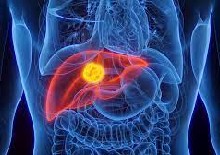
The evolving landscape of precision medicine in primary liver cancer
liver cancer, personalized care, precision medicine
The field of oncology and cancer research is changing. As our understanding of the underlying biology of the disease improves, the one-size-fits-all treatment model has been exposed as inadequate. PLC is among the hardest to treat malignancies and as such carries one of the worst prognoses. While th…
Mar 29th • 3 mins read
 Kirill Peskov, Ivan Azarov, Lulu Chu, Veronika Voronova, Yuri Kosinsky, Gabriel Helmlinger
Quantitative Mechanistic Modeling in Support of Pharmacological Therapeutics Development in Immuno-Oncology
immuno-oncology, mechanistic models, tumor vs. immune system, systems pharmacology, pharmacokinetics, pharmacodynamics, molecular and cellular biomarkers
There has been significant growth in the development of immuno-modulating pharmacological treatments for various cancers following the approval of the first immune checkpoint inhibitor. Challenges in immuno-oncology (IO) drug development are complex and span from the discovery phase to late-…
Apr 30th • 12 mins read
 Carrie Printz
Cancer experts point to new advances in research and treatment: A recent report by the American Association for Cancer Research highlights unprecedented successes as well as ongoing challenges in the cancer field
FDA, AACR, immunotherapeutics, immunotherapy, precision therapies, ALK, EGFR, BRAF
Within the last few years, cancer research has made significant strides, leading to the approval of 22 new cancer treatments by the FDA between August 1, 2017, and July 31, 2018. Among these, notable advancements include 14 anticancer therapeutics, such as CAR T-cell therapies for non-Hodgkin lympho…
Apr 1st • 2 mins read

 Envision Pharma Group
AI-powered real-world evidence: Strategically enhancing value and access
Oncology, Clinical Development, Targeted Therapy, Immunotherapy, Genomic Profiling, CAR-T Cell Therapy, Precision Medicine
Real-world evidence (RWE) complements traditional randomized controlled trials by providing insights from diverse data sources, helping healthcare decision-makers with coverage, reimbursement, and treatment guidelines. Artificial intelligence (AI) and natural language processing (NLP) are pivotal…
Aug 22nd • 5 mins read
 Eric Q. Konnick
The regulatory landscape of precision oncology laboratory medicine in the United States - Perspective on the past 5 years and considerations for future regulation
Oncology, Regulation, Testing, LDTs, FDA, CLIA, CMS
The regulatory landscape for precision oncology in the United States is complex, involving multiple governmental agencies with varying jurisdictions. Since 2014, several regulatory proposals have been introduced following the FDA's draft guidance on laboratory-developed tests. There are ongoing …
May 22nd • 8 mins read
 Nicole M. Kuderer and Gary H. Lyman
Evolving Landscape of US Food and Drug Administration Drug Approval in the Era of Precision Oncology: Finding the Right Balance Between Access and Safety
FDA, trials, drug approval, access, safety
Balance is needed between enhancing drug access and ensuring patient safety. Accurate surrogate endpoints and sophisticated trial designs are crucial for predicting clinical benefits. Safety data before final approvals and postapproval assessments for vulnerable populations are necessary. Value…
Jun 20th • 3 mins read
 Thomas Schmitt
Reagent Solutions to Support Outbreak Response Against Bundibugyo Virus
Ebola haemorrhagic fever is a syndrome that can lead to death within a few days of the onset of symptoms. It directly affects the immune system and the vascular bed, resulting in an extremely high mortality rate. The Ebola virus (EBOV) belongs to the Filoviridae family within the order Mononegaviral…
Sep 4th • 0 min read
Thomas Schmitt
Reagent Solutions to Support Outbreak Response Against Bundibugyo Virus
Ebola haemorrhagic fever is a syndrome that can lead to death within a few days of the onset of symptoms. It directly affects the immune system and the vascular bed, resulting in an extremely high mortality rate. The Ebola virus (EBOV) belongs to the Filoviridae family within the order Mononegaviral…
Sep 4th • 0 min read