
Results for 'CAR T-cell'
Browse oncology articles matching CAR T-cell — expert analysis, clinical perspectives, and industry updates from across drug development and care delivery. Use the tabs above for podcasts, press releases, partners, and people for the same search.
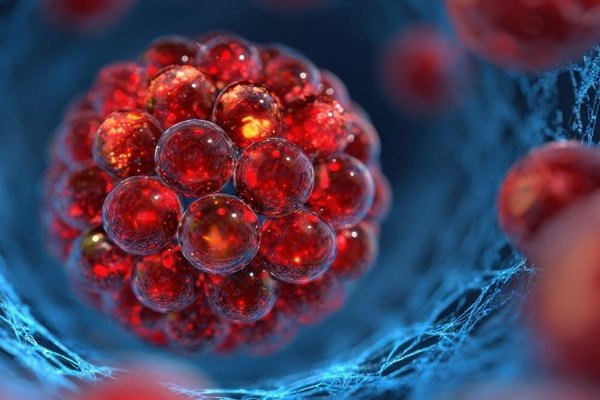
 David J. Segarnick, PhD, Chief Medical Officer, Educational Resource Systems and David E. Wazer, MD, FACRO, FABS, FACR, FASTRO
From Genomic Testing to Digital Biomarkers: The Expanding Role of Biomarkers in Oncology
oncology biomarkers, precision oncology, predictive biomarkers
Biomarkers have moved from the margins of oncology to the center of clinical decision-making. They now help establish diagnosis and prognosis, identify patients most likely to benefit from targeted therapy or immunotherapy, monitor response, detect molecular residual disease and emerging resistance,…
Aug 20th • 35 mins read

 Michael Pietrack

 Tom Caravela
Job Search Checklist for Aspiring Medical Science Liaisons
Medical Science Liaison, MSL role, MSL career tips, Pharmaceutical industry jobs, Break into MSL career
Tips to Help Break into Your First MSL Role The Medical Science Liaison (MSL) role, has become one of the most sought-after career paths in the Pharmaceutical and Biotech industry. What does it take to land a role as a Medical Science Liaison? As an MSL Recruiter, this is a question that I am…
May 17th • 2 mins read
 Tom Caravela
How to Prepare for a Virtual or Video Interview
virtual interview tips, video interview preparation, mastering virtual communication, professional video interview setup, successful online interview
As we are quickly becoming thrust into the age of “virtual” meetings and video interviews, job seekers and industry professionals need to be completely prepared to master this new paradigm of interpersonal communication. Here are some important tips for acing your next video interview: …
Mar 19th • 1 min read
 Bridget Rasmusson
Presentation Nails and Fails: 7 Tips to Ace Your Next MSL Presentation
MSL interview tips, scientific presentation skills, hiring managers expectations, medical science liaison communication, virtual interview preparation
The presentation portion of the MSL interview is truly “make or break,” and more often than not, the most highly weighted category of the entire interview process. Countless Hiring Managers have passed on MSL candidates that do not perform well on their scientific presentation – re…
Oct 12th • 1 min read

 iNIZIO
Clinical Educator Oncology Program Improves Adherence by 29%
CASE STUDY (US) The Challenge Client’s specialty product had a complicated oral therapy regimen requiring supplemental support to patients. Therapy administered for chronic life-threatening condition in which patients are generally older and polypharmic. Our Soluti…
Sep 3rd • 1 min read
 iNIZIO
Transforming oncology: Five frontiers driving progress in cancer care
From biomarker-driven breakthroughs to AI-powered early detection and a renewed commitment to equity and patient centricity, the past 12 months have seen major strides across cancer research, treatment, and communication. At Inizio, we’ve had a front-row seat to this transformation, supporting…
May 16th • 5 mins read

 Adela Rodriguez, Francis Esposito, Helena Oliveres, Ferran Torres and Joan Maurel
Are Quality of Randomized Clinical Trials and ESMO-Magnitude of Clinical Benefit Scale Two Sides of the Same Coin, to Grade Recommendations for Drug Approval?
quality randomized studies, ESMO-MCBS, drug approval
The approval of new cancer drugs by the FDA and EMA is primarily based on positive results from well-designed randomized phase III clinical trials (RCTs). Not all RCTs are analyzed to support drug approval recommendations, highlighting the need for scales to evaluate RCT quality and clinical…
Feb 11th • 3 mins read
 Ioannis Tsagakis and Maria Papatriantafyllou
Safeguarding cancer research funding by European charities amidst the COVID-19 pandemic
cancer charities, cancer research, COVID‐19, funding, pandemic, policy, AECC, AIRC
The COVID-19 outbreak has had a significant impact on cancer research and cancer care. European cancer charities are required to reassess their strategies. There is a need to safeguard income and provide support to cancer researchers. It is crucial to sustain cancer research funding during thes…
Nov 22nd • 3 mins read
 Cornelius F Waller & Adriano Friganovi´c
Biosimilars in oncology: key role of nurses in patient education
biologics, biosimilars, cancer care, nurse
Biosimilars can reduce costs and improve access to cancer therapies, but unfamiliarity may hinder their adoption. Nurses, as trusted healthcare providers, are crucial in educating patients about biosimilars. Biosimilars are highly regulated and offer benefits comparable to existing biologic…
Jun 15th • 10 mins read
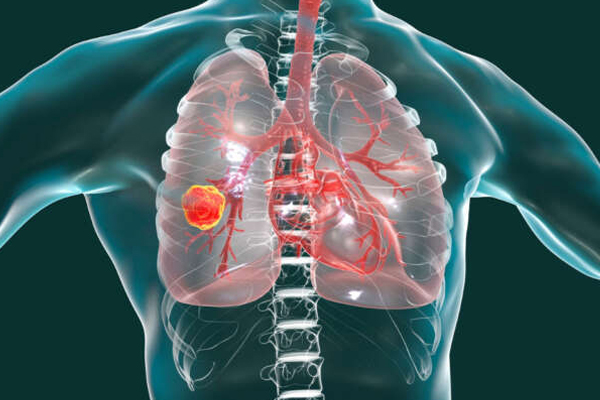 Tanja Cufer, Tudor E. Ciuleanu, Peter Berzinec, Gabriela Galffy, Marko Jakopovic, Jacek Jassem, Dragana Jovanovic, Zhasmina Mihaylova, Gyula Ostoros, Christiane Thallinger, Milada Zemanova, Christoph Zielinski
Access to Novel Drugs for Non-Small Cell Lung Cancer in Central and Southeastern Europe: A Central European Cooperative Oncology Group Analysis
Health Outcomes and Economics of Cancer Care, Lung Cancer, NSCLC, EMA
Treatment for non-small cell lung cancer (NSCLC) has significantly improved with the introduction of targeted and immune-oncologic drugs. Despite rapid development and European Medicinal Agency (EMA) registration, these novel drugs are not easily accessible in Central and Eastern European (CEE) c…
Nov 24th • 10 mins read
 Ruben Van Paemel, Roos Vlug, Katleen De Preter, Nadine Van Roy, Frank Speleman, Leen Willems, Tim Lammens, Geneviève Laureys, Gudrun Schleiermacher, Godelieve A. M. Tytgat, Kathy Astrahantseff, Hedwig Deubzer, Bram De Wilde
The pitfalls and promise of liquid biopsies for diagnosing and treating solid tumors in children: a review
Liquid biopsies, Pediatric solid tumors, Cell-free DNA profiling
Cell-free DNA profiling via blood samples is emerging as a non-invasive method for cancer genomic characterization. Liquid biopsies are set to be integrated into pediatric cancer clinical trials, offering benefits such as earlier therapy response monitoring and detection of residual disease.…
Jan 3rd • 10 mins read

 Envision Pharma Group
Medical affairs: The power behind redefining commercialization
Medical affairs commercialization, integrating science in pharma, redefining medical affairs roles, strategic medical affairs leadership, early engagement with payers, pharmaceutical commercialization strategies, upskilling in medical affairs, medical aff
In March 2024, Envision Pharma Group held a Medical Affairs Professional Society (MAPS) Americas roundtable with leaders discussing the role of science in commercialization strategies and the importance of integrating robust scientific understanding into the commercial journey. Envision revisite…
Aug 2nd • 3 mins read
 Shen Lin, Yaping Huang, Liangliang Dong, Meiyue Li, Yahong Wang, Dian Gu, Wei Wu, Dongni Nian, Shaohong Luo, Xiaoting Huang, Xiongwei Xu and Xiuhua Weng
The correlation between the costs and clinical benefits of PD-1/PD-L1 inhibitors in malignant tumors: An evaluation based on ASCO and ESMO frameworks
PD-1/PD-L1 inhibitors, malignant tumors, ASCO, ESMO, Immune Checkpoint Inhibitors, Gastrointestinal Cancers
Cancer drug innovation has significantly accelerated in the 21st century, with novel drug approvals and expenditures increasing notably. Assessment frameworks ASCO-VF and ESMO-MCBS were used to evaluate the clinical benefit of PD-1/PD-L1 inhibitors, finding that nearly half of the trials met "mea…
Feb 23rd • 9 mins read
 Garth W. Strohbehn, MD, MPhil, Allen S. Lichter, MD and Mark J. Ratain, MD
US Government Payer-Funded Trials to Address Oncology's Drug-Dosing Conundrum: A Congressional Call to Action?
ORF, NCTN, dosing, clinical trials, FDA
Since the mid-20th century, cancer drug development has been driven by the "more is better" assumption, seeking the maximum tolerated dose in early trials. The FDA's Oncology Center of Excellence (OCE) Project Optimus (2021) requires dose optimization for new oncology drugs, but this does not…
Feb 13th • 5 mins read
 Mahnum Shahzad, BA, Huseyin Naci, MHS, PhD, Anita K. Wagner, PharmD, MPH, DrPH
Estimated Medicare Spending on Cancer Drug Indications With a Confirmed Lack of Clinical Benefit After US Food and Drug Administration Accelerated
medicare spending, drug indications, AA, FDA, medicare, ODAC
Medicare Parts B and D spent at least $569 million between 2017 and 2019 on 10 cancer drug indications without confirmed overall survival (OS) benefit after accelerated approval (AA). Approximately $224 million was spent on drug indications that were either voluntarily withdrawn or recommended fo…
Oct 18th • 5 mins read
 Paul G. Kluetz, Patricia Keegan, George D. Demetri, Katherine Thornton, Joohee Sul, Janice Kim, Harvey Katzen, Laurie Beth Burke, R. Donald Harvey, Elleni Alebachew, Sundeep Agrawal, Abhilasha Nair, Martha Donoghue
FDA Oncology Center of Excellence Project Renewal: Engaging the Oncology Community to Update Product Labeling for Older Oncology Drugs
FDA labeling format, PLR format, oncology drugs, FDA
The FDA conducts independent reviews of scientific data to ensure the safety and efficacy of investigational drug products. FDA-approved product labeling is a highly trusted source of information for approved drug use. FDA approval is only the beginning of a drug's lifecycle, with ongoing c…
Feb 15th • 13 mins read
 Alison Betts, Piet H. van der Graaf
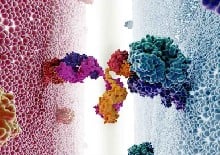
Mechanistic Quantitative Pharmacology Strategies for the Early Clinical Development of Bispecific Antibodies in Oncology
bispecific antibodies, mechanistic quantitative, pharmacology, strategies, bsAbs, immune cells, MABEL aproach
Bi-specific antibodies (bsAbs) are crucial in cancer therapy research. BsAbs offer advantages such as enhanced efficacy and reduced systemic toxicity. Early clinical trials face challenges with dose selection and predicting effective doses. Clinical variability is influenced by factors like fun…
Jun 24th • 18 mins read
 Sean P Martin, Xin Wei Wang
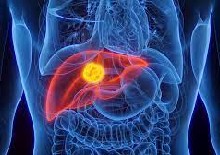
The evolving landscape of precision medicine in primary liver cancer
liver cancer, personalized care, precision medicine
The field of oncology and cancer research is changing. As our understanding of the underlying biology of the disease improves, the one-size-fits-all treatment model has been exposed as inadequate. PLC is among the hardest to treat malignancies and as such carries one of the worst prognoses. While th…
Mar 29th • 3 mins read
 G. Pentheroudakis
Recent eUpdates to the ESMO Clinical Practice Guidelines on hepatocellular carcinoma, cancer of the pancreas, soft tissue and visceral sarcomas, cancer of the prostate and gastric cancer
ESMO, hepatocellular carcinoma, gastric cancer, prostate cancer
The following ESMO Clinical Practice Guidelines have been recently updated with new treatment recommendations for the ESMO Clinical Practice Guidelines on Hepatocellular Carcinoma, Cancer of the Pancreas, Soft Tissue and Visceral Sarcomas, Cancer of the Prostate and Gastric Cancer.
Jun 6th • 2 mins read