
Results for 'Lung Cancer'
FollowBrowse oncology articles matching Lung Cancer — expert analysis, clinical perspectives, and industry updates from across drug development and care delivery. Use the tabs above for podcasts, press releases, partners, and people for the same search.
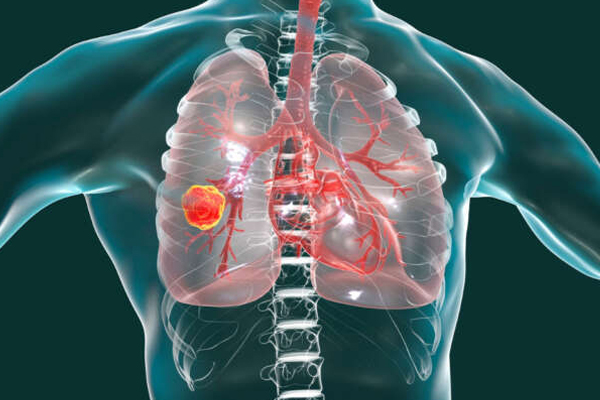
 Tanja Cufer, Tudor E. Ciuleanu, Peter Berzinec, Gabriela Galffy, Marko Jakopovic, Jacek Jassem, Dragana Jovanovic, Zhasmina Mihaylova, Gyula Ostoros, Christiane Thallinger, Milada Zemanova, Christoph Zielinski
Access to Novel Drugs for Non-Small Cell Lung Cancer in Central and Southeastern Europe: A Central European Cooperative Oncology Group Analysis
Health Outcomes and Economics of Cancer Care, Lung Cancer, NSCLC, EMA
Treatment for non-small cell lung cancer (NSCLC) has significantly improved with the introduction of targeted and immune-oncologic drugs. Despite rapid development and European Medicinal Agency (EMA) registration, these novel drugs are not easily accessible in Central and Eastern European (CEE) c…
Nov 24th • 10 mins read
 Jonathan H. Cheng, Justin W. Tiulim, Sheng Zhou, Anthony El-Khoueiry and Jorge Nieva
Mandatory Research Biopsy Requirements Delay Initiation of Clinical Trials
biomarker, clinical trial, targeted therapy, immunotherapy, mandatory research biopsy, oncology, lung cancer, head and neck cancer
The study investigates the impact of requiring fresh tumor tissue biopsies for enrollment in clinical trials. Key findings include: Requiring biopsies significantly increases screening duration, with a median of 30 days compared to 14 days for trials without biopsy requirements (p < 0.0001). …
Oct 18th • 10 mins read
 Rajat Thawani, Neha Agrawal, Nicholas F Taflin, Adel Kardosh, Emerson Y Chen
Application of Value Framework to Phase III Trials of Immune Checkpoint Inhibitors in Esophageal and Gastric Cancer
esophageal cancer, gastric cancer, comparative effectiveness research, outcome assessment, antineoplastic agents, immunotherapy
Immunotherapy checkpoint inhibitors are FDA-approved for first-line metastatic esophageal and gastric cancer, but not all scenarios benefit from non-selective chemo-immunotherapy application. ASCO Net Health scores were consistently higher in esophageal cancer trials compared to gastric cancer tr…
Jan 13th • 8 mins read
 Ajaikumar B Kunnumakkara kunnumakkara@iitg.ac.in, Devivasha Bordoloi, Bethsebie Lalduhsaki Sailo, Nand Kishor Roy, Krishan Kumar Thakur, Kishore Banik, Mehdi Shakibaei, Subash C Gupta, and Bharat B Aggarwal
Cancer drug development: The missing links
Cancer, drugs, patient survival, pre-clinical, clinical, cost
Despite advanced science and technology, cancer incidence is highest in America and Europe. Science and technology alone are not sufficient for treating diseases like cancer. Over 95% of drugs/compounds that show promise in pre-clinical trials fail in phase I clinical trials in humans. Most pre…
Apr 18th • 20 mins read

 iNIZIO
Transforming oncology: Five frontiers driving progress in cancer care
From biomarker-driven breakthroughs to AI-powered early detection and a renewed commitment to equity and patient centricity, the past 12 months have seen major strides across cancer research, treatment, and communication. At Inizio, we’ve had a front-row seat to this transformation, supporting…
May 16th • 5 mins read
 Nicole Grossmann, Martin Robausch, Eleen Rothschedl, Claudia Wild, Judit Simon
Publicly accessible evidence of health-related quality of life benefits associated with cancer drugs approved by the European Medicines Agency between 2009 and 2015
Antineoplastic agents, Health-related quality of life, Clinical efficacy, Drug approvals, Patient-relevant outcomes
The study investigates cancer drugs approved by the European Medicines Agency (EMA) that initially lack Health-related Quality of Life (HRQoL) information. Data was collected for cancer indications approved between January 2009 and October 2015, using sources like the EMA website, clinical…
Feb 23rd • 12 mins read
 Mahnum Shahzad, BA, Huseyin Naci, MHS, PhD, Anita K. Wagner, PharmD, MPH, DrPH
Estimated Medicare Spending on Cancer Drug Indications With a Confirmed Lack of Clinical Benefit After US Food and Drug Administration Accelerated
medicare spending, drug indications, AA, FDA, medicare, ODAC
Medicare Parts B and D spent at least $569 million between 2017 and 2019 on 10 cancer drug indications without confirmed overall survival (OS) benefit after accelerated approval (AA). Approximately $224 million was spent on drug indications that were either voluntarily withdrawn or recommended fo…
Oct 18th • 5 mins read
 Carrie Printz
Cancer experts point to new advances in research and treatment: A recent report by the American Association for Cancer Research highlights unprecedented successes as well as ongoing challenges in the cancer field
FDA, AACR, immunotherapeutics, immunotherapy, precision therapies, ALK, EGFR, BRAF
Within the last few years, cancer research has made significant strides, leading to the approval of 22 new cancer treatments by the FDA between August 1, 2017, and July 31, 2018. Among these, notable advancements include 14 anticancer therapeutics, such as CAR T-cell therapies for non-Hodgkin lympho…
Apr 1st • 2 mins read
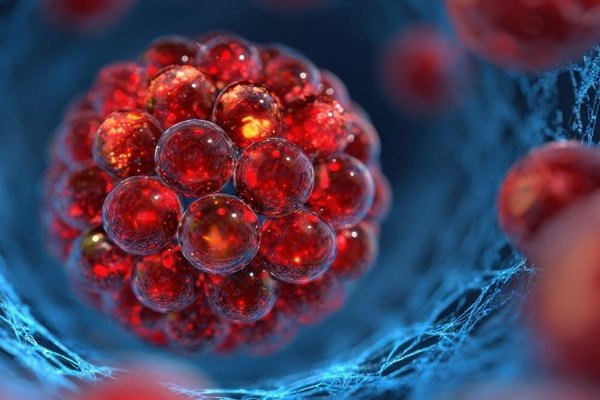
 David J. Segarnick, PhD, Chief Medical Officer, Educational Resource Systems and David E. Wazer, MD, FACRO, FABS, FACR, FASTRO
From Genomic Testing to Digital Biomarkers: The Expanding Role of Biomarkers in Oncology
oncology biomarkers, precision oncology, predictive biomarkers
Biomarkers have moved from the margins of oncology to the center of clinical decision-making. They now help establish diagnosis and prognosis, identify patients most likely to benefit from targeted therapy or immunotherapy, monitor response, detect molecular residual disease and emerging resistance,…
Aug 20th • 35 mins read
 Jayson L. Parker, Sebnem S. Kuzulugil, Kirill Pereverzev, Stephen Mac, Gilberto Lopes, Zain Shah, Ashini Weerasinghe, Daniel Rubinger, Adam Falconi, Ayse Bener, Bora Caglayan, Rohan Tangri, Nicholas Mitsakakis
Does biomarker use in oncology improve clinical trial failure risk? A large-scale analysis
biomarker, clinical trial, failure, analysis, NSCLC, oncology
Data from clinical trials across four oncology indications (breast cancer, NSCLC, melanoma, and colorectal cancer) from 1998 to 2017 were analyzed to assess drug approval likelihood based on biomarker status. Using multi-state Markov models, which describe stochastic processes, the study…
Feb 23rd • 8 mins read
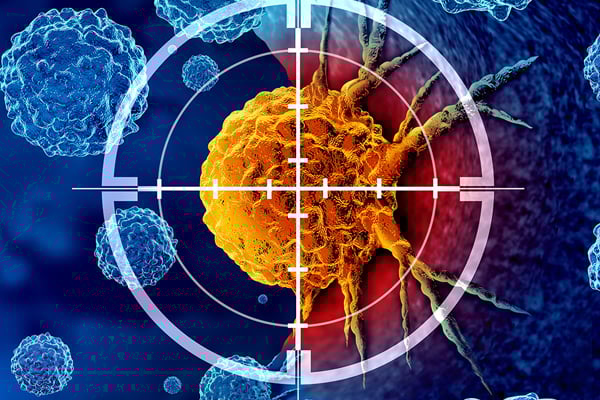 Ali Raza Khaki
Loose Regulatory Standards Portend a New Era of Imprecision Oncology
precision oncology, TMB-high, homologous recombination deficiency, Olaparib, pembrolizumab
Precision oncology aims to tailor cancer treatment based on genetic understanding, revolutionizing oncology. The FDA has been approving drugs under precision oncology with broad indications that may not align with studied populations. Examples include the approval of pembrolizumab for a wide ran…
Dec 1st • 4 mins read
 Kristina Jenei, BSN, MS, Daniel E. Meyers, MD, MS, Vinay Prasad, MD, MPH
The Inclusion of Women in Global Oncology Drug Trials Over the Past 20 Years
inclusion, woman, global, oncology drug trials, NIH
Women represented 77% of newly diagnosed thyroid cancer cases in 2020 but only comprised 51% of participants in related trials. Women accounted for 48% of global colon cancer cases but only 33% of trial participants for colon cancer therapeutics. Higher enrollment of women in NIH-funded studies …
Aug 26th • 2 mins read