
Results for 'cancer care'
Browse oncology articles matching cancer care — expert analysis, clinical perspectives, and industry updates from across drug development and care delivery. Use the tabs above for podcasts, press releases, partners, and people for the same search.
 Forbes Books Press Release Official
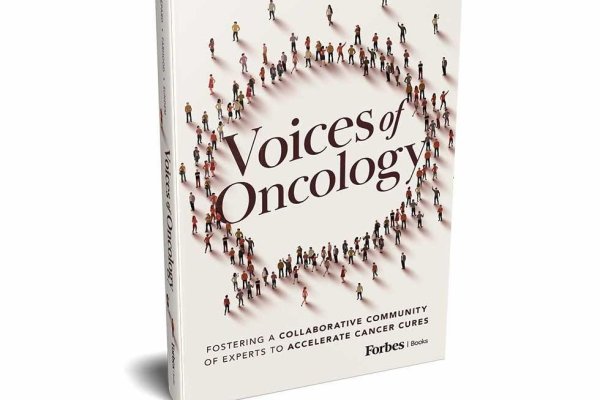
New Book Unites Oncology’s Brightest Minds To Innovate Cancer Cures
Voices of Oncology, Cancer cures, Oncology Voice Network, Kirk V. Shepard, Ramin Farhood, Forbes Books, Cancer treatment innovation, Oncology collaboration, Patient engagement in oncology, Precision medicine cancer
Voices of Oncology: Fostering a Collaborative Community of Experts to Accelerate Cancer Cures is a book by Kirk V. Shepard, M.D., and Ramin Farhood, PharmD, M.B.A., featuring insights from 33 contributors in the oncology field. It is available on platforms like Amazon and Barne…
Sep 9th • 5 mins read
 Emmanuelle Jacqueta, Ghania Kerouani-Lafayeb, Francoise Grudeb, Sergio Goncalvesb, Annie Lorenced, Florence Turcryb, Liora Brunelb, Laetitia Belgodereb, Adrien Monardc, Gaëlle Guyaderb, Lotfi Boudalib, Nicolas Albin
Comparative study on anticancer drug access times between FDA, EMA and the French temporary authorisation for use program over 13 years
Innovation, Expanded access, Early drug access, Cancer, FDA, EMA
Cancer incidence is increasing globally, and while medical innovation significantly impacts patient survival, the drug development process is lengthy, often exceeding 10 years for marketing authorization (MA). France has implemented the ATU (Temporary Authorization for Use) program to facil…
Apr 7th • 12 mins read
 Ioannis Tsagakis and Maria Papatriantafyllou
Safeguarding cancer research funding by European charities amidst the COVID-19 pandemic
cancer charities, cancer research, COVID‐19, funding, pandemic, policy, AECC, AIRC
The COVID-19 outbreak has had a significant impact on cancer research and cancer care. European cancer charities are required to reassess their strategies. There is a need to safeguard income and provide support to cancer researchers. It is crucial to sustain cancer research funding during thes…
Nov 22nd • 3 mins read
 Xuanyi Li, Elizabeth A. Sigworth, Adrianne H. Wu, Jess Behrens, Shervin A. Etemad, Seema Nagpal, Ronald S. Go, Kristin Wuichet, Eddy J. Chen, Samuel M. Rubinstein, Neeta K. Venepalli, Benjamin F. Tillman, Andrew J. Cowan, Martin W. Schoen, Andrew Malty, J
Seven decades of chemotherapy clinical trials: a pan-cancer social network analysis
Cancer Medical research, Randomized controlled trials, Clinical trial design
Clinical trials are crucial in establishing cancer care standards, but the social dynamics among researchers in this field have not been extensively studied. A social network analysis of authors involved in chemotherapy-based prospective trials from 1946 to 2018 reveals significant insights. The …
Oct 16th • 12 mins read
 E.M. Ray, L.A. Carey, K.E. Reeder-Hayes
Leveraging existing data to contextualize phase II clinical trial findings in oncology
HER2, phase II trials, oncology, iDFS, EBC, early stage breast cancer
In the USA, over 250,000 women are diagnosed with early-stage breast cancer (EBC) yearly, with up to 30% having HER2 amplification. The standard care for HER2-positive EBC involves chemotherapy plus HER2-directed therapy for one year. The phase II Adjuvant Paclitaxel and Trastuzumab (APT) tr…
Sep 21st • 3 mins read
 Shani Paluch-Shimon, Nathan I. Cherny, Elisabeth G.E. de Vries, Urania Dafni, Martine J. Piccart, Nicola Jane Latino, Fatima Cardoso
Application of the ESMO-Magnitude of Clinical Benefit Scale (V.1.1) to the field of early breast cancer therapies
early breast cancer, magnitude of clinical benefit scale, ESMO-MCBS
The ESMO-MCBS is a validated value scale for assessing solid tumour anticancer treatments, specifically for therapies with curative intent. This document represents the first large-scale field testing of the ESMO-MCBS in early breast cancer to assess its applicability and identify any sh…
Sep 6th • 20 mins read
 Daan Geert Knapen, Nathan I. Cherny, Panagiota Zygoura, Nicola Jane Latino, Jean-Yves Douillard, Urania Dafni, Elisabeth G.E. de Vries, Derk Jan de Groot
Lessons learnt from scoring adjuvant colon cancer trials and meta-analyses using the ESMO-Magnitude of Clinical Benefit Scale V.1.1
ESMO-MCBS, early colon cancer, toxicity, adjuvant chemotherapy, quality of life
Form 1 of the European Society for Medical Oncology-Magnitude of Clinical Benefit Scale (ESMO-MCBS) is used to grade therapies with curative intent. The study aimed to evaluate the applicability and reasonableness of the ESMO-MCBS scores in early colon cancer. Adjuvant studies were sourced f…
Sep 6th • 17 mins read
 Cornelius F Waller & Adriano Friganovi´c
Biosimilars in oncology: key role of nurses in patient education
biologics, biosimilars, cancer care, nurse
Biosimilars can reduce costs and improve access to cancer therapies, but unfamiliarity may hinder their adoption. Nurses, as trusted healthcare providers, are crucial in educating patients about biosimilars. Biosimilars are highly regulated and offer benefits comparable to existing biologic…
Jun 15th • 10 mins read
 Sean X Zhang, MSc , Dean Fergusson, PhD , Jonathan Kimmelman, PhD
Proportion of Patients in Phase I Oncology Trials Receiving Treatments That Are Ultimately Approved
cancer, biological markers, phase 1 clinical trials, drug approval, medical oncology, united states food and drug administration guidelines, adverse event, national comprehensive cancer network, American society of clinical oncology
Phase I oncology trials are often considered a therapeutic option, but this claim is primarily based on surrogate measures like objective response rates. A systematic search was conducted to evaluate the therapeutic value of phase I cancer trial participation, focusing on the likelihood of patien…
Apr 1st • 14 mins read
 Tanja Cufer, Tudor E. Ciuleanu, Peter Berzinec, Gabriela Galffy, Marko Jakopovic, Jacek Jassem, Dragana Jovanovic, Zhasmina Mihaylova, Gyula Ostoros, Christiane Thallinger, Milada Zemanova, Christoph Zielinski
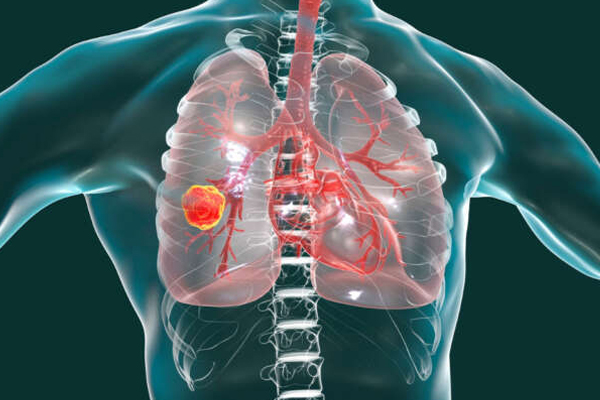
Access to Novel Drugs for Non-Small Cell Lung Cancer in Central and Southeastern Europe: A Central European Cooperative Oncology Group Analysis
Health Outcomes and Economics of Cancer Care, Lung Cancer, NSCLC, EMA
Treatment for non-small cell lung cancer (NSCLC) has significantly improved with the introduction of targeted and immune-oncologic drugs. Despite rapid development and European Medicinal Agency (EMA) registration, these novel drugs are not easily accessible in Central and Eastern European (CEE) c…
Nov 24th • 10 mins read
 Doreen A. Ezeife MD, Francois Dionne PhD, Aline Fusco Fares MD, Ellen Laura Rose Cusano MD, Rouhi Fazelzad BSc, MISt, Wenzie Ng BSc, MPharm, RPh, Don Husereau BSc Pharm, MSc, Farzad Ali BPharm, MSc, Christina Sit MSc, Barry Stein B.Com BCL, LLB, Jennifer
Value assessment of oncology drugs using a weighted criterion-based approach
anticancer therapy, multicriteria decision analysis, value assessment, value assessment framework
The rising cost of anticancer therapy has led to efforts to quantify the overall value of new cancer treatments. Multicriteria decision analysis is used to incorporate multiple criteria and perspectives into value assessment. A diverse, multistakeholder group developed a drug assessment framewor…
Dec 20th • 15 mins read
 Idine Mousavi, BA; Timothée Olivier, MD; Vinay Prasad, MD, MPH
Cost per Event Averted in Cancer Trials in the Adjuvant Setting From 2018 to 2022
anticancer drugs, adjuvant therapy, FDA approvals, cost per event averted, surrogate endpoints, oncology drug costs
Importance: Evaluating the cost-effectiveness of adjuvant therapies based on the cost per event averted. Objective: To assess the costs per event averted for anticancer drugs approved by the FDA between January 2018 and March 2022. Design, Setting, and Participants: Cross-sectional study of F…
Jun 10th • 30 mins read
 Christopher A. Busch, MSC; Johannes Krisam, PhD; Meinhard Kieser, PhD
A Comprehensive Comparison of Additional Benefit Assessment Methods Applied by Institute for Quality and Efficiency in Health Care and European Society for Medical Oncology for Time-to-Event Endpoints After Significant Phase III Trials—A Simulation Study
cancer drug trials, time-to-event endpoints, overall survival, added benefit assessment, IQWiG, hazard ratio thresholds
The European Society for Medical Oncology (ESMO) and the German Institute for Quality and Efficiency in Health Care (IQWiG) use different methods for assessing additional benefit in cancer therapies, with ESMO considering both relative and absolute benefits, while IQWiG focuses on the upper limit …
Jun 28th • 30 mins read
 YuQian Liu, PharmD
Uptake of Oncology Biosimilars: Managed Care Strategies to Improve Value-Based Care Systems
biosimilars in oncology, cost-effective cancer care, healthcare education, bioequivalence studies, biosimilar adoption, cancer treatment protocols
Biosimilars offer a cost-effective alternative in oncology, expanding access to cancer care, but their utilization is inconsistent due to varying perceptions and knowledge among stakeholders. Increasing the adoption of biosimilars requires improved education and understanding among healthcare pro…
Jul 7th • 25 mins read
 Natansh D. Modi, BPharm; Ahmad Y. Abuhelwa, PhD; Ross A. McKinnon, PhD
Audit of Data Sharing by Pharmaceutical Companies for Anticancer Medicines Approved by the US Food and Drug Administration
IPD sharing, clinical trial transparency, FDA anticancer approvals, oncology trials, data accessibility, pharmaceutical industry
The study examines the eligibility for individual participant data (IPD) sharing from clinical trials that supported the FDA approval of anticancer medicines over the past 10 years. Of the 304 trials analyzed, 136 (45%) were eligible for IPD sharing, while 168 (55%) were not. IPD sharing rates v…
Jul 28th • 20 mins read
 Rachel E. Sachs, JD, MPH, Kyle A. Gavulic, BA, Julie M. Donohue, PhD
Recent Trends in Medicaid Spending and Use of Drugs With US Food and Drug Administration Accelerated Approval
FDA accelerated approval, Medicaid spending, prescription drug costs, surrogate endpoints, cancer drugs, drug approval pathway
The study examines the impact of drugs approved through the FDA’s accelerated approval program on state Medicaid spending. From 1992 to 2020, 216 drug-indication pairs were granted accelerated approval, with a significant increase in cancer drug approvals in recent years. Although drugs wi…
Oct 8th • 25 mins read
 Robbe Saesen, Georgios Kantidakis, Ann Marinus, Denis Lacombe, Isabelle Huys
How do cancer clinicians perceive real-world data and the evidence derived therefrom? Findings from an international survey of the European Organisation for Research and Treatment of Cancer
real-world evidence, real-world data, oncology, cancer, survey, clinicians, randomized controlled trials, Europe
Real-world evidence (RWE) is increasingly being used in the development and decision-making processes for anticancer therapies, but clinician views on its use are unclear. A survey conducted between May and July 2021 involved 557 clinicians from 30 countries and 13 cancer domains. Most clinician…
Aug 1st • 45 mins read
 Diana Romero
Research Highlights In The News From ESMO
ESMO, cancer treatment optimization, NICHE-2 trial, SWOG S1801 trial, IPSOS trial, oncology research
The ESMO 2022 Congress took place in Paris in September 2022, with around 29,000 delegates, including 5,000 online participants. The program featured a broad range of topics, including clinical trial results, translational studies, and health policy initiatives. A key theme discussed was…
Sep 30th • 10 mins read
 Rinda Devi Bachu, Mariam Abou-Dahech, Swapnaa Balaji, Sai H. S. Boddu, Samson Amos, Vishal Singh, R. Jayachandra Babu, Amit K. Tiwari
Oncology biosimilars: New developments and future directions
biologics in cancer treatment, biosimilars development, high cost of biologics, healthcare system burden, biosimilars safety, regulatory guidelines for biosimilars, immunogenicity concerns, pharmacoeconomics of biosimilars
Biologics are essential in cancer treatment as both therapeutic and supportive care agents, but they are expensive and require extensive testing to ensure safety. The high cost of developing and manufacturing biologics can be a burden on healthcare systems, limiting patient access to necessary tr…
Nov 25th • 30 mins read
 Miloš D. Miljković, MD, MSc, Jordan E. Tuia, BA, Timothée Olivier, MD
Association Between US Drug Price and Measures of Efficacy for Oncology Drugs Approved by the US Food and Drug Administration From 2015 to 2020
Cancer drug pricing, Cancer care costs, Cancer drug efficacy, Progression-free survival, Value-based pricing in oncology, FDA anticancer approvals
The US has worse cancer-related outcomes compared to other high-income countries and has the highest cost of cancer care globally. High costs may be attributed to the improved efficacy of expensive new cancer drugs, though the relationship between cost and benefit is debated. A study found a lin…
Oct 31st • 10 mins read