
Results for 'patient access'

 Emmanuelle Jacqueta, Ghania Kerouani-Lafayeb, Francoise Grudeb, Sergio Goncalvesb, Annie Lorenced, Florence Turcryb, Liora Brunelb, Laetitia Belgodereb, Adrien Monardc, Gaëlle Guyaderb, Lotfi Boudalib, Nicolas Albin
Comparative study on anticancer drug access times between FDA, EMA and the French temporary authorisation for use program over 13 years
Innovation, Expanded access, Early drug access, Cancer, FDA, EMA
Cancer incidence is increasing globally, and while medical innovation significantly impacts patient survival, the drug development process is lengthy, often exceeding 10 years for marketing authorization (MA). France has implemented the ATU (Temporary Authorization for Use) program to facil…
Apr 7th • 12 mins read
 Nicole Grossmann, Martin Robausch, Eleen Rothschedl, Claudia Wild, Judit Simon
Publicly accessible evidence of health-related quality of life benefits associated with cancer drugs approved by the European Medicines Agency between 2009 and 2015
Antineoplastic agents, Health-related quality of life, Clinical efficacy, Drug approvals, Patient-relevant outcomes
The study investigates cancer drugs approved by the European Medicines Agency (EMA) that initially lack Health-related Quality of Life (HRQoL) information. Data was collected for cancer indications approved between January 2009 and October 2015, using sources like the EMA website, clinical…
Feb 23rd • 12 mins read
 John Hair, Thomas Maryon, and Cristian Lieneck
Identification of Barriers Preventing Biosimiliar Oncology Medication Adoption
oncology, cancer, biosimilar, barriers, access, obstacles
Biosimilars are biologic medical products that are almost identical to original biologics but are produced by different companies. They are safe, effective, and can reduce costs for insurers and patients. Despite the benefits, barriers exist for oncologists and cancer centers in prescribing biosi…
Oct 27th • 30 mins read

 Envision Pharma Group
Patient involvement: A must-have in medicine development, but is it being overlooked in a cost-constrained environment?
patient engagement in pharma, patient-centric drug development, life sciences industry innovation, patient insights in medicine, regulatory compliance in patient engagement, patient involvement in clinical trials, benefits of patient advocacy, patient-cen
The life sciences industry is in a constant state of advancement, bringing more and more groundbreaking medicines, cutting-edge technologies, and innovative solutions to market. Amidst these rapid changes, patients remain at the heart of these scientific developments. In recent decades, the l…
May 9th • 5 mins read
 Qiyou Wu, Zhiwei Lian, Xin Wang, Hanchao Cheng, Jing Sun, Hui Yu, Gong Zhang, Fan Wu, Jian Liu and Chuanben Chen
Factors associated with the uptake of biosimilars for breast cancer treatment from the perspectives of physicians and patients-Evidence from China
biosimilar, breast cancer, uptake, physician, patient
In 2021, the trastuzumab biosimilar entered clinical use in the research setting with less than 20% uptake in China, significantly lower than in the EU. Older patients are more likely to adopt biosimilars due to price sensitivity and financial concerns. Only 11.3% of patients switched from …
Jan 12th • 13 mins read
 Nicole M. Kuderer and Gary H. Lyman
Evolving Landscape of US Food and Drug Administration Drug Approval in the Era of Precision Oncology: Finding the Right Balance Between Access and Safety
FDA, trials, drug approval, access, safety
Balance is needed between enhancing drug access and ensuring patient safety. Accurate surrogate endpoints and sophisticated trial designs are crucial for predicting clinical benefits. Safety data before final approvals and postapproval assessments for vulnerable populations are necessary. Value…
Jun 20th • 3 mins read
 Vishwanath Sathyanarayanan, MD, DM, Christopher R. Flowers, MD, MSc, and Swaminathan P. Iyer, MD, MBBS
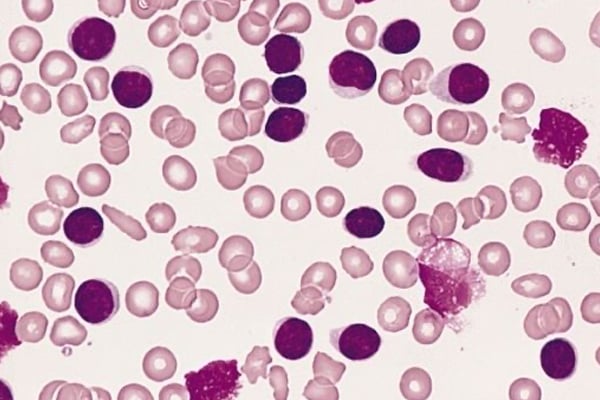
Comparison of Access to Novel Drugs for Lymphoma and Chronic Lymphocytic Leukemia Between India and the United States
lymphoma, leukemia, India, United States, biosimiliars
The review examines the costs and access to novel drugs for treating chronic lymphocytic leukemia (CLL) and lymphoma in the United States and India over the last 5 years. Clinical outcomes for patients with hematologic malignancies have improved significantly due to immunotherapeutic and tar…
Jul 21st • 12 mins read
 Cornelius F Waller & Adriano Friganovi´c
Biosimilars in oncology: key role of nurses in patient education
biologics, biosimilars, cancer care, nurse
Biosimilars can reduce costs and improve access to cancer therapies, but unfamiliarity may hinder their adoption. Nurses, as trusted healthcare providers, are crucial in educating patients about biosimilars. Biosimilars are highly regulated and offer benefits comparable to existing biologic…
Jun 15th • 10 mins read
 Sean X Zhang, MSc , Dean Fergusson, PhD , Jonathan Kimmelman, PhD
Proportion of Patients in Phase I Oncology Trials Receiving Treatments That Are Ultimately Approved
cancer, biological markers, phase 1 clinical trials, drug approval, medical oncology, united states food and drug administration guidelines, adverse event, national comprehensive cancer network, American society of clinical oncology
Phase I oncology trials are often considered a therapeutic option, but this claim is primarily based on surrogate measures like objective response rates. A systematic search was conducted to evaluate the therapeutic value of phase I cancer trial participation, focusing on the likelihood of patien…
Apr 1st • 14 mins read
 Tanja Cufer, Tudor E. Ciuleanu, Peter Berzinec, Gabriela Galffy, Marko Jakopovic, Jacek Jassem, Dragana Jovanovic, Zhasmina Mihaylova, Gyula Ostoros, Christiane Thallinger, Milada Zemanova, Christoph Zielinski
Access to Novel Drugs for Non-Small Cell Lung Cancer in Central and Southeastern Europe: A Central European Cooperative Oncology Group Analysis
Health Outcomes and Economics of Cancer Care, Lung Cancer, NSCLC, EMA
Treatment for non-small cell lung cancer (NSCLC) has significantly improved with the introduction of targeted and immune-oncologic drugs. Despite rapid development and European Medicinal Agency (EMA) registration, these novel drugs are not easily accessible in Central and Eastern European (CEE) c…
Nov 24th • 10 mins read
 Envision Pharma Group
AI-powered real-world evidence: Strategically enhancing value and access
Oncology, Clinical Development, Targeted Therapy, Immunotherapy, Genomic Profiling, CAR-T Cell Therapy, Precision Medicine
Real-world evidence (RWE) complements traditional randomized controlled trials by providing insights from diverse data sources, helping healthcare decision-makers with coverage, reimbursement, and treatment guidelines. Artificial intelligence (AI) and natural language processing (NLP) are pivotal…
Aug 22nd • 5 mins read

 Michael Pietrack
Leadership Lab: 4 Ways Biopharma Leaders Can Prepare for Media Interviews
Media coverage can help biopharma executives connect with, inform and inspire the public. In this column, Kaye/Bassman’s Michael Pietrack and three communications experts share how to make the most of these opportunities.
Aug 20th • 6 mins read

 Bridget Rasmusson
6 Tips to Ace Your Next MSL Interview!
digital marketing, content optimization, search engine ranking, keyword research, on-page SEO
As a Medical Affairs-focused recruitment firm, we see MSL interview "wins" and slip-ups on a daily basis. From our experience working with candidates across all therapeutic areas and across the entire United States, I've noticed a few trends that might help you get that next interview "win" under yo…
Sep 28th • 1 min read
 Tom Caravela
MSL Evolution: New Trends and Titles That May Emerge
digital marketing strategies, SEO best practices, content marketing tips, social media optimization, keyword research tools
The COVID-19 pandemic has clearly had a profound impact on Field Medical Affairs. Has the Medical Science Liaison role changed forever? What new titles, trends and opportunities might emerge as a result of the new age for Field Medical and the evolution of the Medical Science Liaison? Is virtual en…
Apr 5th • 1 min read
 Bridget Rasmusson
Positioning Yourself to Become an MSL in 2022
MSL role, clinical background, academic background, research background, industry, MSL Society, conference, scientific expert, therapeutic expertise, pharma companies
After attending the MSL Society’s 9th annual conference in Vegas Last week, I have taken some time to reflect on inquiries our team received about how to effectively step into the MSL role from a clinical, academic, or research background. Industry is a tough nut to crack, but it is absolutely…
Dec 21st • 10 mins read

 iNIZIO
Transforming oncology: Five frontiers driving progress in cancer care
From biomarker-driven breakthroughs to AI-powered early detection and a renewed commitment to equity and patient centricity, the past 12 months have seen major strides across cancer research, treatment, and communication. At Inizio, we’ve had a front-row seat to this transformation, supporting…
May 16th • 5 mins read
 B. Gyawali, E. G. E. de Vries, U. Dafni, T. Amaral, J. Barriuso, J. Bogaerts, A. Calles, G. Curigliano, C. Gomez-Roca, B. Kiesewetter, S. Oosting, A. Passaro, G. Pentheroudakis, M. Piccart, F. Roitberg, J. Tabernero, N. Tarazona, D. Trapani, R. Wester, G.
Biases in study design, implementation, and data analysis that distort the appraisal of clinical benefit and ESMO-Magnitude of Clinical Benefit Scale (ESMO-MCBS) scoring
ESMO-MCBS, bias, clinical trial design, clinical trial implementation, clinical trial reporting, clinical trial analysis
The ESMO-MCBS is a tool used for scoring the clinical benefit of cancer medicines as reported in clinical trials, assuming valid research methodologies and quality implementation. The tool's effectiveness is compromised by studies with flawed design, implementation, or data analysis, w…
Apr 20th • 8 mins read
 Nidal Al-Huniti, Yan Feng, Jingyu (Jerry) Yu, Zheng Lu, Mario Nagase, Diansong Zhou, Jennifer Sheng
Tumor Growth Dynamic Modeling in Oncology Drug Development and Regulatory Approval: Past, Present, and Future Opportunities
tumor growth, drug developement, drug approval, TGD, MIDD, PDUFA
Model-informed drug development (MIDD) has advanced rapidly in recent years, especially in oncology. The Prescription Drug User Fee Act (PDUFA) VI includes commitments to enhance MIDD. Tumor growth dynamic (TGD) modeling is a key MIDD approach used to accelerate drug development, support new dru…
Jun 26th • 18 mins read
 Ruben Van Paemel, Roos Vlug, Katleen De Preter, Nadine Van Roy, Frank Speleman, Leen Willems, Tim Lammens, Geneviève Laureys, Gudrun Schleiermacher, Godelieve A. M. Tytgat, Kathy Astrahantseff, Hedwig Deubzer, Bram De Wilde
The pitfalls and promise of liquid biopsies for diagnosing and treating solid tumors in children: a review
Liquid biopsies, Pediatric solid tumors, Cell-free DNA profiling
Cell-free DNA profiling via blood samples is emerging as a non-invasive method for cancer genomic characterization. Liquid biopsies are set to be integrated into pediatric cancer clinical trials, offering benefits such as earlier therapy response monitoring and detection of residual disease.…
Jan 3rd • 10 mins read
 Doreen A. Ezeife MD, Francois Dionne PhD, Aline Fusco Fares MD, Ellen Laura Rose Cusano MD, Rouhi Fazelzad BSc, MISt, Wenzie Ng BSc, MPharm, RPh, Don Husereau BSc Pharm, MSc, Farzad Ali BPharm, MSc, Christina Sit MSc, Barry Stein B.Com BCL, LLB, Jennifer
Value assessment of oncology drugs using a weighted criterion-based approach
anticancer therapy, multicriteria decision analysis, value assessment, value assessment framework
The rising cost of anticancer therapy has led to efforts to quantify the overall value of new cancer treatments. Multicriteria decision analysis is used to incorporate multiple criteria and perspectives into value assessment. A diverse, multistakeholder group developed a drug assessment framewor…
Dec 20th • 15 mins read