
Results for 'ICI'
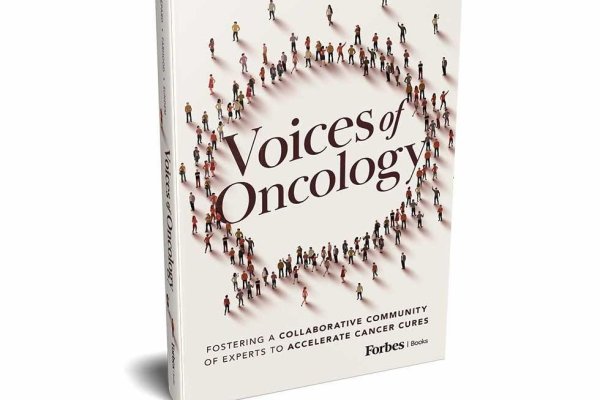
 Forbes Books Press Release Official
New Book Unites Oncology’s Brightest Minds To Innovate Cancer Cures
Voices of Oncology, Cancer cures, Oncology Voice Network, Kirk V. Shepard, Ramin Farhood, Forbes Books, Cancer treatment innovation, Oncology collaboration, Patient engagement in oncology, Precision medicine cancer
Voices of Oncology: Fostering a Collaborative Community of Experts to Accelerate Cancer Cures is a book by Kirk V. Shepard, M.D., and Ramin Farhood, PharmD, M.B.A., featuring insights from 33 contributors in the oncology field. It is available on platforms like Amazon and Barne…
Sep 9th • 5 mins read
 Kushal T. Kadakia, MSc, Malke Asaad, MD, Erica Adlakha, MS, Michael J. Overman, MD, Cristina M. Checka, MD, and Anaeze C. Offodile II, MD, MPH
Virtual Clinical Trials in Oncology-Overview, Challenges, Policy Considerations, and Future Directions
Virtual, Clinical trials, policy, analytics, telemedicine
The COVID-19 pandemic has significantly impacted clinical research, particularly in oncology, by accelerating the adoption of virtual clinical trials. These trials can address challenges such as high costs and participant burdens associated with traditional trials. Virtual Clinical Trials: Utiliz…
Apr 8th • 4 mins read
 Karen Geary
Finding the Right Drug at the Right Dose the First Time: Has the Era of Personalized Formularies Finally Arrived?
drug dose, dose, pharmacogenomics, Personalized medicine
Many Americans take medications that are ineffective or cause adverse reactions due to genetic differences in drug metabolism. Pharmacogenomics, the study of how genes affect drug response, can help tailor medications to individual genetic profiles, reducing trial and error in prescriptions. A s…
Sep 27th • 1 min read
 Ali Raza Khaki
Loose Regulatory Standards Portend a New Era of Imprecision Oncology
precision oncology, TMB-high, homologous recombination deficiency, Olaparib, pembrolizumab
Precision oncology aims to tailor cancer treatment based on genetic understanding, revolutionizing oncology. The FDA has been approving drugs under precision oncology with broad indications that may not align with studied populations. Examples include the approval of pembrolizumab for a wide ran…
Dec 1st • 4 mins read
 Jorge J. García, Luis E. Raez, Daniel Rosas
A narrative review of biosimilars: a continued journey from the scientific evidence to practice implementation
Biosimilars, interchangeability, extrapolation, immunogenicity
Biologic agents have significantly improved the management of serious health conditions over the last two decades, offering better treatment outcomes and quality of life compared to traditional chemotherapy. The cost of biologic drugs is high, leading to increased healthcare expenses. This mirror…
Aug 3rd • 10 mins read
 J. Remon, R. García-Campelo, E. de Álava, R. Vera, J. L. Rodríguez-Peralto, Á. Rodríguez-Lescure, B. Bellosillo, P. Garrido, F. Rojo & R. Álvarez-Alegret
Liquid biopsy in oncology: a consensus statement of the Spanish Society of Pathology and the Spanish Society of Medical Oncology
Liquid biopsy, ctDNA, Oncology, Genomic profling, Precision medicine
The proportion of cancer patients with tumors having potentially targetable genomic alterations is increasing. Diagnosing these alterations can lead to tailored treatments and provide additional predictive information on immunotherapy efficacy. In many cases, initial tissue biopsies are ina…
Sep 26th • 17 mins read
 Daan Geert Knapen, Nathan I. Cherny, Panagiota Zygoura, Nicola Jane Latino, Jean-Yves Douillard, Urania Dafni, Elisabeth G.E. de Vries, Derk Jan de Groot
Lessons learnt from scoring adjuvant colon cancer trials and meta-analyses using the ESMO-Magnitude of Clinical Benefit Scale V.1.1
ESMO-MCBS, early colon cancer, toxicity, adjuvant chemotherapy, quality of life
Form 1 of the European Society for Medical Oncology-Magnitude of Clinical Benefit Scale (ESMO-MCBS) is used to grade therapies with curative intent. The study aimed to evaluate the applicability and reasonableness of the ESMO-MCBS scores in early colon cancer. Adjuvant studies were sourced f…
Sep 6th • 17 mins read
 Vanessa Arciero, BS, Seanthel Delos Santos, Liza Koshy
Assessment of Food and Drug Administration- and European Medicines Agency-Approved Systemic Oncology Therapies and Clinically Meaningful Improvements in Quality of Life: A Systematic Review
ESMO, MCBS, FDA, ASCO-VF, EMA, QOL
Recent oncology therapies approved by the FDA and EMA often lack evidence of clinically meaningful improvements in quality of life (QOL). Only 40% of FDA-approved and 58% of EMA-approved oncology therapies had published QOL evidence. Clinically meaningful QOL improvements beyond minimal dif…
Feb 11th • 4 mins read
 Eric Q. Konnick
The regulatory landscape of precision oncology laboratory medicine in the United States - Perspective on the past 5 years and considerations for future regulation
Oncology, Regulation, Testing, LDTs, FDA, CLIA, CMS
The regulatory landscape for precision oncology in the United States is complex, involving multiple governmental agencies with varying jurisdictions. Since 2014, several regulatory proposals have been introduced following the FDA's draft guidance on laboratory-developed tests. There are ongoing …
May 22nd • 8 mins read
 Nicole Grossmann, Martin Robausch, Eleen Rothschedl, Claudia Wild, Judit Simon
Publicly accessible evidence of health-related quality of life benefits associated with cancer drugs approved by the European Medicines Agency between 2009 and 2015
Antineoplastic agents, Health-related quality of life, Clinical efficacy, Drug approvals, Patient-relevant outcomes
The study investigates cancer drugs approved by the European Medicines Agency (EMA) that initially lack Health-related Quality of Life (HRQoL) information. Data was collected for cancer indications approved between January 2009 and October 2015, using sources like the EMA website, clinical…
Feb 23rd • 12 mins read
 Jamie Riley
The Talent Inflection Point in Pharma and Biotech: A Challenge to Companies — and a Call to Candidates
hiring, talent demand, job market
As pipelines advance and execution accelerates, pharma and biotech hiring may shift again in 2026, reshaping talent demand.
Feb 4th • 7 mins read
 Angus Liu
Large pharma companies reduced headcounts by more than 22K in 2025 as $300B patent cliff looms
headcount, reduction, revenue per employee
Large pharmaceutical companies, each with at least $20 billion in 2025 revenue, collectively reduced their workforces by more than 22,000 employees last year. Among the 17 largest pharma companies analyzed in a Fierce Pharma review of annual reports, only five logged a head count increase in 2025…
Mar 23rd • 10 mins read

 Michael Pietrack
Leadership Lab: 10 Ways Executives Can Stay Visible, Valuable Between Jobs
For biopharma executives who are between roles, navigating the transitionary time can be challenging. However, they can remain visible and valuable so they’re ready to seize their next big opportunity.
Oct 22nd • 5 mins read
 Michael Pietrack
Leadership Lab: 5 Ways Biopharma Execs Can Restore Trust, Retain Talent After Layoffs
In the latest installment of his column, Kaye/Bassman’s Michael Pietrack shares five ways leaders can help their teams after a layoff, from acknowledging emotions to reestablishing culture.
Jun 25th • 4 mins read

 Michael Pietrack
Leadership Lab: How To Spot When Employees Are About To Walk Away
Employees rarely leave companies for one reason alone. In this column, Kaye/Bassman’s Michael Pietrack shares a framework that helps leaders identify when their team members are thinking about heading for the exit—and how to address it.
Oct 22nd • 7 mins read
 Michael Pietrack
Leadership Lab: 4 Ways Biopharma Leaders Can Prepare for Media Interviews
Media coverage can help biopharma executives connect with, inform and inspire the public. In this column, Kaye/Bassman’s Michael Pietrack and three communications experts share how to make the most of these opportunities.
Aug 20th • 6 mins read
 Michael Pietrack
The Four Employment Agreement Questions Every Pharma Executive Must Ask
opinion, career advice, leaderhsip, legal
Clarity on employment terms is essential to protect careers. In this column, Kaye/Bassman’s Michael Pietrack speaks to employment attorney Howard Matalon, JD, partner at OlenderFeldman, on how to evaluate the fine print of an employment agreement.
Dec 18th • 6 mins read

 Tom Caravela
Where Did My Interview Go Wrong?
interview preparation tips, job interview mistakes, hiring manager feedback, candidate interview performance, professional recruiter advice
During the course of a lengthy and involved interview process, job seekers are often left wondering where they went wrong, or why things didn’t pan out positively in their favor – with a great job offer at the end and an exciting next chapter to look forward to in their professional care…
Apr 24th • 1 min read
 Tom Caravela
Mastering the First Impression
first impression, job interviews, professional communication, resume tips, LinkedIn profile
Why is a first impression so important? Mainly because it could also be your last, and only, impression on someone. Oftentimes, job seekers can fail at conveying a positive first impression, and they will unfortunately never get another chance to show who they truly are. This is an area that I feel …
Jan 29th • 2 mins read