
Results for 'early-drug development'
Browse oncology articles matching early-drug development — expert analysis, clinical perspectives, and industry updates from across drug development and care delivery. Use the tabs above for podcasts, press releases, partners, and people for the same search.

 Emmanuelle Jacqueta, Ghania Kerouani-Lafayeb, Francoise Grudeb, Sergio Goncalvesb, Annie Lorenced, Florence Turcryb, Liora Brunelb, Laetitia Belgodereb, Adrien Monardc, Gaëlle Guyaderb, Lotfi Boudalib, Nicolas Albin
Comparative study on anticancer drug access times between FDA, EMA and the French temporary authorisation for use program over 13 years
Innovation, Expanded access, Early drug access, Cancer, FDA, EMA
Cancer incidence is increasing globally, and while medical innovation significantly impacts patient survival, the drug development process is lengthy, often exceeding 10 years for marketing authorization (MA). France has implemented the ATU (Temporary Authorization for Use) program to facil…
Apr 7th • 12 mins read
 Consolación Molto MD, Thomas J. Hwang AB, Maria Borrell MD, Marta Andres MD, Ignasi Gich MD, PhD, Agustí Barnadas MD, PhD, Eitan Amir MD, PhD, Aaron S. Kesselheim MD, JD, MPH, Ariadna Tibau MD, PhD
Clinical benefit and cost of breakthrough cancer drugs approved by the US Food and Drug Administration
USFDA, ESMO-MCBS, NCCN, ASCO-CRC, clinical, drug aroval
The study evaluates the clinical benefit and pricing of breakthrough-designated versus non-breakthrough-designated cancer drugs. The analysis covers approvals from July 2012 to December 2017, using frameworks like ASCO-VF, ASCO-CRC, ESMO-MCBS, and NCCN Evidence Blocks. High clinical benef…
Jul 22nd • 12 mins read
 Dean Bottino, Rachael Liu, Hojjat Bazzazi, Karthik Venkatakrishnan
Quantitative Translation in Immuno-Oncology Research and Development
Quantitative Translation, Immuno-Oncology, Research, Development, CIC
Exploring the therapeutic potential of the rapidly expanding field of immuno-oncology (IO) drug targets and diverse therapeutic modalities. Recognizing the need for principled decisions based on biologically sound quantitative translation in a competitive clinical research environment. High…
Jul 9th • 3 mins read
 Nidal Al-Huniti, Yan Feng, Jingyu (Jerry) Yu, Zheng Lu, Mario Nagase, Diansong Zhou, Jennifer Sheng
Tumor Growth Dynamic Modeling in Oncology Drug Development and Regulatory Approval: Past, Present, and Future Opportunities
tumor growth, drug developement, drug approval, TGD, MIDD, PDUFA
Model-informed drug development (MIDD) has advanced rapidly in recent years, especially in oncology. The Prescription Drug User Fee Act (PDUFA) VI includes commitments to enhance MIDD. Tumor growth dynamic (TGD) modeling is a key MIDD approach used to accelerate drug development, support new dru…
Jun 26th • 18 mins read
 Mythili Shastry, PhD, Avantika Gupta, PhD, Sarat Chandarlapaty, MD, PhD, Matthew Young, MD, Thomas Powles, MD, and Erika Hamilton, MD
Rise of Antibody-Drug Conjugates: The Present and Future
Antibody-drug conjugates (ADCs) are designed for targeted cancer therapy by delivering cytotoxic agents specifically to tumor cells, minimizing harm to normal cells. ADCs have evolved significantly since the first FDA approval in 2000, with advancements leading to approvals for various tumor type…
May 25th • 20 mins read
 M. Ochoa de Olza, M. Oliva, C. Hierro I. Matos, J. Martin-Liberal, E. Garralda
Early-drug development in the era of immuno-oncology: are we ready to face the challenges?
immunotherapy, early-drug development, toxicology studies, dose determination
The classical development of drugs is being replaced by a seamless drug-development process. First-in-human trials now often include large expansion cohorts to quickly identify early signs of activity and achieve rapid regulatory approval. Intense competition among pharmaceutical companies and t…
Jun 26th • 26 mins read

 Envision Pharma Group
Patient involvement: A must-have in medicine development, but is it being overlooked in a cost-constrained environment?
patient engagement in pharma, patient-centric drug development, life sciences industry innovation, patient insights in medicine, regulatory compliance in patient engagement, patient involvement in clinical trials, benefits of patient advocacy, patient-cen
The life sciences industry is in a constant state of advancement, bringing more and more groundbreaking medicines, cutting-edge technologies, and innovative solutions to market. Amidst these rapid changes, patients remain at the heart of these scientific developments. In recent decades, the l…
May 9th • 5 mins read
 Yafang Huanga, Weiyi Xiongb, Jingwei Zhaoa, Wentao Lia, Li Mac, Hao Wua
Early phase clinical trial played a critical role in the Food and Drug Administration-approved indications for targeted anticancer drugs: a cross-sectional study from 2012 to 2021
Early phase clinical trial, Dose-expansion cohort, Single-arm trial, Pivotal trial, FDA approved indications, Targeted anticancer drugs
Analysis of 188 FDA-approved indications for 95 molecular targeted anticancer drugs between 2012 and 2021. 59.6% of indications were approved based on Early Phase Clinical Trials (EPCTs). There was a notable annual increase of 22.2% in approvals based on EPCTs, compared to a 5.0% increase for ph…
Mar 9th • 10 mins read
 Emerson Y. Chen, MD, Vikram Raghunathan, MD, Vinay Prasad, MD, MPH
An Overview of Cancer Drugs Approved by the US Food and Drug Administration Based on the Surrogate End Point of Response Rate
FDA, RR, drug approvels, OS
Many cancer drugs come to market based on single-arm studies with modest RRs. Most of these drugs are tested in studies of over 100 patients prior to approval. Most (60%) of these approvals lack randomized clinical trials during the life cycle of the product. Our findings suggest greater room for th…
May 28th • 5 mins read
 Ajaikumar B Kunnumakkara kunnumakkara@iitg.ac.in, Devivasha Bordoloi, Bethsebie Lalduhsaki Sailo, Nand Kishor Roy, Krishan Kumar Thakur, Kishore Banik, Mehdi Shakibaei, Subash C Gupta, and Bharat B Aggarwal
Cancer drug development: The missing links
Cancer, drugs, patient survival, pre-clinical, clinical, cost
Despite advanced science and technology, cancer incidence is highest in America and Europe. Science and technology alone are not sufficient for treating diseases like cancer. Over 95% of drugs/compounds that show promise in pre-clinical trials fail in phase I clinical trials in humans. Most pre…
Apr 18th • 20 mins read
 Hagop M. Kantarjian MD, Ferran Prat PhD, JD, David P. Steensma MD, Razelle Kurzrock MD, David J. Stewart MD, Mikkael A. Sekeres MD, Joseph Leveque MD
Cancer research in the United States: A critical review of current status and proposal for alternative models
cancer research, research, NCI, Drug industry-driven research model, development in research, 2018 cancer model
Early research focused on tissue histology and animal models, with surgery and radiotherapy as primary treatments. 1950s: Introduction of cell lines (e.g., HeLa cells) and first anticancer drugs (antifolates, thiopurines), leading to the establishment of the Cancer Chemotherapy National Service C…
May 14th • 10 mins read
 Kirsten B Goldberg, Gideon M Blumenthal, Amy E McKee and Richard Pazdur
The FDA Oncology Center of Excellence and Precision Medicine
Biomarkers, drugs, hematology, medicine, oncology, precision medicine, regulation
The FDA is exploring real-world evidence to enhance understanding of the long-term safety and efficacy of oncology drugs. Initiatives like the Information Exchange and Data Transformation initiative are building infrastructure for big-data analytics. Additionally, patient-focused programs aim to inc…
Nov 6th • 3 mins read
 Guillaume Beinse, MD, Virgile Tellier, Valentin Charvet, MSc, Eric Deutsch, MD, PhD, Isabelle Borget, PharmD, PhD, Christophe Massard, MD, PhD., Antoine Hollebecque, MD, PhD, and Loic Verlingue, MD
Prediction of Drug Approval After Phase I Clinical Trials in Oncology: RESOLVED2
clinical trials, RESOLVED2, FDA
Challenge in Oncology Drug Development: The field is currently facing an increase in the number of antineoplastic agents (ANAs) entering phase I clinical trials (P1CTs) and a high attrition rate for final FDA approval. Objective: Development of a machine learning algorithm, RESOLVED2, to …
Sep 20th • 12 mins read
 Natansh D. Modi, BPharm; Ahmad Y. Abuhelwa, PhD; Ross A. McKinnon, PhD
Audit of Data Sharing by Pharmaceutical Companies for Anticancer Medicines Approved by the US Food and Drug Administration
IPD sharing, clinical trial transparency, FDA anticancer approvals, oncology trials, data accessibility, pharmaceutical industry
The study examines the eligibility for individual participant data (IPD) sharing from clinical trials that supported the FDA approval of anticancer medicines over the past 10 years. Of the 304 trials analyzed, 136 (45%) were eligible for IPD sharing, while 168 (55%) were not. IPD sharing rates v…
Jul 28th • 20 mins read
 Garth W. Strohbehn, MD, MPhil, Allen S. Lichter, MD and Mark J. Ratain, MD
US Government Payer-Funded Trials to Address Oncology's Drug-Dosing Conundrum: A Congressional Call to Action?
ORF, NCTN, dosing, clinical trials, FDA
Since the mid-20th century, cancer drug development has been driven by the "more is better" assumption, seeking the maximum tolerated dose in early trials. The FDA's Oncology Center of Excellence (OCE) Project Optimus (2021) requires dose optimization for new oncology drugs, but this does not…
Feb 13th • 5 mins read
 Alison Betts, Piet H. van der Graaf
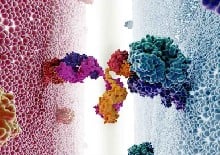
Mechanistic Quantitative Pharmacology Strategies for the Early Clinical Development of Bispecific Antibodies in Oncology
bispecific antibodies, mechanistic quantitative, pharmacology, strategies, bsAbs, immune cells, MABEL aproach
Bi-specific antibodies (bsAbs) are crucial in cancer therapy research. BsAbs offer advantages such as enhanced efficacy and reduced systemic toxicity. Early clinical trials face challenges with dose selection and predicting effective doses. Clinical variability is influenced by factors like fun…
Jun 24th • 18 mins read
 Jamie Riley
The Talent Inflection Point in Pharma and Biotech: A Challenge to Companies — and a Call to Candidates
hiring, talent demand, job market
As pipelines advance and execution accelerates, pharma and biotech hiring may shift again in 2026, reshaping talent demand.
Feb 4th • 7 mins read

 iNIZIO
Transforming oncology: Five frontiers driving progress in cancer care
From biomarker-driven breakthroughs to AI-powered early detection and a renewed commitment to equity and patient centricity, the past 12 months have seen major strides across cancer research, treatment, and communication. At Inizio, we’ve had a front-row seat to this transformation, supporting…
May 16th • 5 mins read
 Ali Raza Khaki
Loose Regulatory Standards Portend a New Era of Imprecision Oncology
precision oncology, TMB-high, homologous recombination deficiency, Olaparib, pembrolizumab
Precision oncology aims to tailor cancer treatment based on genetic understanding, revolutionizing oncology. The FDA has been approving drugs under precision oncology with broad indications that may not align with studied populations. Examples include the approval of pembrolizumab for a wide ran…
Dec 1st • 4 mins read
 J. Remon, R. García-Campelo, E. de Álava, R. Vera, J. L. Rodríguez-Peralto, Á. Rodríguez-Lescure, B. Bellosillo, P. Garrido, F. Rojo & R. Álvarez-Alegret
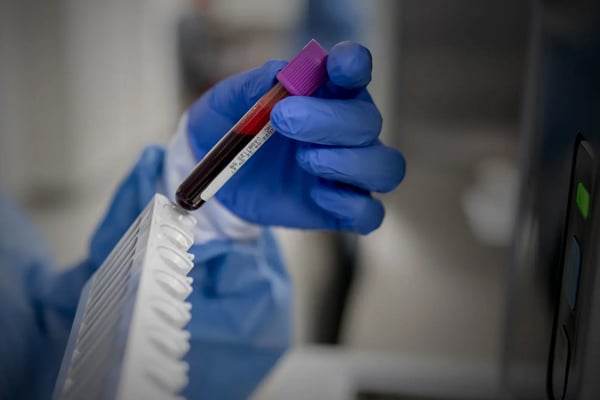
Liquid biopsy in oncology: a consensus statement of the Spanish Society of Pathology and the Spanish Society of Medical Oncology
Liquid biopsy, ctDNA, Oncology, Genomic profling, Precision medicine
The proportion of cancer patients with tumors having potentially targetable genomic alterations is increasing. Diagnosing these alterations can lead to tailored treatments and provide additional predictive information on immunotherapy efficacy. In many cases, initial tissue biopsies are ina…
Sep 26th • 17 mins read