
Join to access to all OVN content. Join for Free
Cancer research in the United States: A critical review of current status and proposal for alternative models
cancer research research NCI Drug industry-driven research model development in research 2018 cancer model

Cancer research in the United States: A critical review of current status and proposal for alternative models


Share This Article


Summary

  • Early research focused on tissue histology and animal models, with surgery and radiotherapy as primary treatments.
  • 1950s: Introduction of cell lines (e.g., HeLa cells) and first anticancer drugs (antifolates, thiopurines), leading to the establishment of the Cancer Chemotherapy National Service Center.
  • Breakthroughs in chemotherapy led to curative treatments for specific cancers like Hodgkin lymphoma and some leukemias.
  • Next 40 years: Development of novel chemotherapy agents and combination therapies, improving outcomes for various cancers.
  • Late 20th century: Identification of tumor-associated genetic alterations and biomarkers, leading to targeted therapies such as monoclonal antibodies and small molecule inhibitors (e.g., imatinib, rituximab, trastuzumab).
  • Recent advancements include immune-oncology modalities like checkpoint inhibitors and CAR-T cell therapies, improving outcomes for traditionally resistant cancers.
  • The FDA has expedited the approval process for cancer drugs, resulting in numerous new therapies, including monoclonal antibodies and protein kinase inhibitors.
  • Significant investments from the NIH, NCI, and biopharmaceutical industry have led to ongoing development of nearly 800 new molecules for various cancer indications.
  • However, challenges remain:
    • Slow pace of clinical drug development and market approval, despite increased resources.
    • Complicated regulatory requirements and unrealistic eligibility criteria for trials.
    • Focus on "me-too" molecules rather than novel approaches.
    • Increased bureaucracy due to contract research organizations (CROs).
    • Concerns over the high cost of new cancer drugs and annual price increases, limiting patient access.

Cancer research in the United States has undergone seismic changes in the past 6 decades. In the early phases, before the second half of the 20th century, cancer laboratory research focused on tissue histology and animal xenograft models, with surgery and radiotherapy being the mainstays of treatment. The 1950s brought both an increased use of patient-derived, transformed cell lines (eg, HeLa cells, first cultured in 1951) and the dawn of the first active anticancer drug therapies (eg, antifolates in 1948 and thiopurines in 1951). Their success prompted the establishment of the Cancer Chemotherapy National Service Center, the predecessor of the National Cancer Institute (NCI) Developmental Therapeutics Program. This public focus, and the resources that followed, led to major breakthroughs in cancer therapy, including curative approaches in some subtypes, such as Hodgkin and non-Hodgkin lymphoma, some acute leukemias, and choriocarcinoma. In 1956, choriocarcinoma became the first solid tumor to be cured with chemotherapy.

Over the next 40 years, there were multiple important advances in chemotherapy, including the development of novel antimetabolites, alkylating agents, nucleoside analogs, platinum analogs, anthracyclines, taxanes, interferons, interleukins, and hormone antagonists. Combinations of these drugs (chemotherapy alone or as an adjunct to surgery, radiotherapy, or hematopoietic stem cell transplantation) improved the outcomes of patients with se lect solid and hematologic malignancies, with curative therapies established for testicular cancer, subtypes of breast cancer, and acute myeloid leukemia...

Click for Source Download PDF version
cancer research, research, NCI, Drug industry-driven research model, development in research, 2018 cancer model

Related Topics

Meet Our Innovation Partners

Loading partners...

You May Also Like

Podcast
What it Takes to Close the Gap in Pediatric Cancer Care with Leo Wang, M.D., Ph.D.
Partner Avatar Monty Pal

What it Takes to Close the Gap in Pediatric Cancer Care with Leo Wang, M.D., Ph.D.

Podcast
Reengineering CAR T for Solid Tumors: What Glioblastoma Has Taught Us with Christine Brown, Ph.D.
Partner Avatar Monty Pal

Reengineering CAR T for Solid Tumors: What Glioblastoma Has Taught Us with Christine Brown, Ph.D.

Podcast
The Long Game of Cancer Genomics: John Carpten, Ph.D., on Building Precision Oncology that Reaches Patients
Partner Avatar Monty Pal

The Long Game of Cancer Genomics: John Carpten, Ph.D., on Building Precision Oncology that Reaches Patients

Podcast
How Engineered Antibodies and Next Generation Imaging Tools are Reshaping Cancer Care with Anna Wu, Ph.D.
Partner Avatar Monty Pal

How Engineered Antibodies and Next Generation Imaging Tools are Reshaping Cancer Care with Anna Wu, Ph.D.

Podcast
Unlocking the Future of Cancer Care: Precision Medicine, AI and the Patient Voice with Dr. Stacy Gray
Partner Avatar Monty Pal

Unlocking the Future of Cancer Care: Precision Medicine, AI and the Patient Voice with Dr. Stacy Gray

Podcast
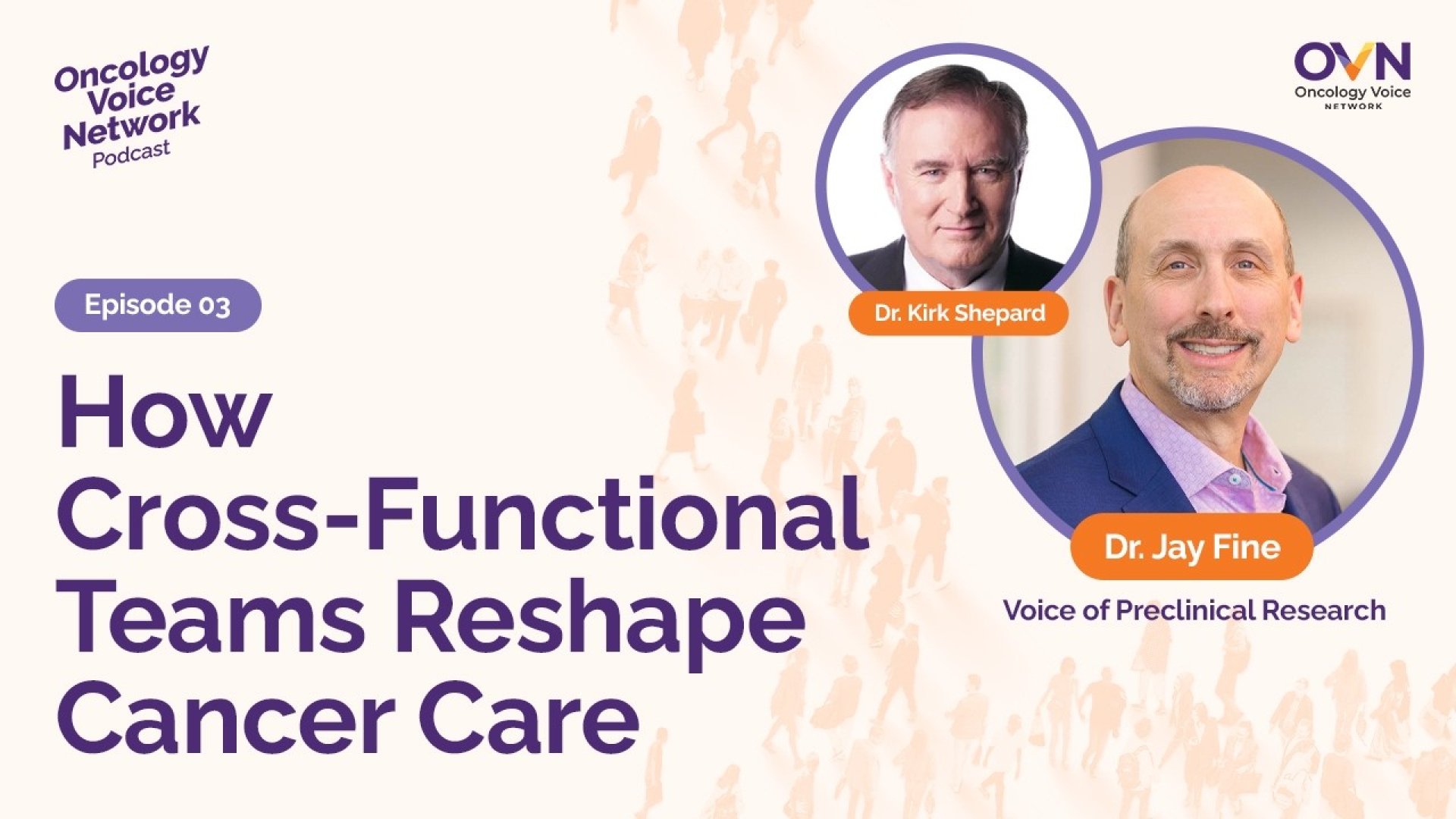
How Cross-Functional Teams Reshape Cancer Care
OVN Avatar Kirk Shepard

How Cross-Functional Teams Reshape Cancer Care

Explore OVN