
Results for 'health outcomes'
Browse oncology articles matching health outcomes — expert analysis, clinical perspectives, and industry updates from across drug development and care delivery. Use the tabs above for podcasts, press releases, partners, and people for the same search.
 Tanja Cufer, Tudor E. Ciuleanu, Peter Berzinec, Gabriela Galffy, Marko Jakopovic, Jacek Jassem, Dragana Jovanovic, Zhasmina Mihaylova, Gyula Ostoros, Christiane Thallinger, Milada Zemanova, Christoph Zielinski
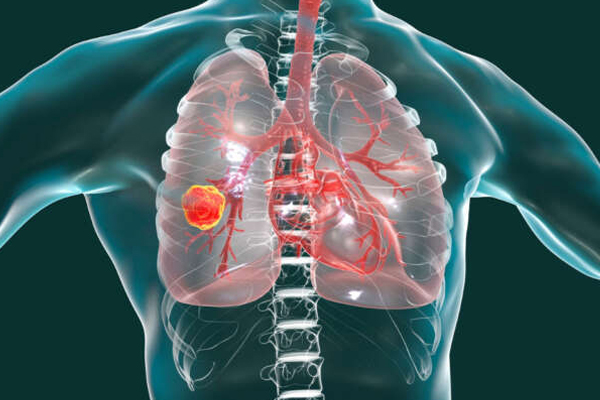
Access to Novel Drugs for Non-Small Cell Lung Cancer in Central and Southeastern Europe: A Central European Cooperative Oncology Group Analysis
Health Outcomes and Economics of Cancer Care, Lung Cancer, NSCLC, EMA
Treatment for non-small cell lung cancer (NSCLC) has significantly improved with the introduction of targeted and immune-oncologic drugs. Despite rapid development and European Medicinal Agency (EMA) registration, these novel drugs are not easily accessible in Central and Eastern European (CEE) c…
Nov 24th • 10 mins read
 Nicole Grossmann, Martin Robausch, Eleen Rothschedl, Claudia Wild, Judit Simon
Publicly accessible evidence of health-related quality of life benefits associated with cancer drugs approved by the European Medicines Agency between 2009 and 2015
Antineoplastic agents, Health-related quality of life, Clinical efficacy, Drug approvals, Patient-relevant outcomes
The study investigates cancer drugs approved by the European Medicines Agency (EMA) that initially lack Health-related Quality of Life (HRQoL) information. Data was collected for cancer indications approved between January 2009 and October 2015, using sources like the EMA website, clinical…
Feb 23rd • 12 mins read

 Envision Pharma Group
Empowering people to drive medical affairs performance with AI
AI in medical affairs, 4Sight approach to AI, empowering medical teams with AI, AI-driven medical affairs performance, enhancing medical affairs through AI, AI integration in healthcare, training for AI adoption, change management in healthcare AI, AI too
Artificial intelligence (AI) is transforming the pharmaceutical industry and continues to be a key topic of discussion in the field. As medical affairs grow more complex, AI can significantly reduce the time required to analyze and extract valuable insights, thereby accelerating the generation of ac…
Aug 14th • 5 mins read
 Francesco Cerisoli, PhD, Farzad Ali, MSc, Tamás Bereczky, MA, PhD, Natacha Bolaños, BS, Lars Bullinger, MD, Sujith Dhanasiri, MPhil, MSc, James Gallagher, PhD, Sonia García Pérez, MSc, Jan Geissler, MiBA, Yann Guillevic, DEA, Kathryn Harrison, PhD, Anasta
Building a Healthcare Alliance for Resourceful Medicine Offensive Against Neoplasms in Hematology Added Value Framework for Hematologic Malignancies: A Comparative Analysis of Existing Tools
clinical value framework, hematology, Healthcare Alliance for Resourceful Medicine, Offensive Against Neoplasms in hematology, patient-reported outcomes, HARMONY, analysis
Current Value Frameworks (VFs) have limitations and do not meet HARMONY's ambitions for assessing the therapeutic/clinical value of innovative health technologies. There is a need for a cross-stakeholder agreement on the definition of "value," which varies among patients, clinicians, and payers. …
May 17th • 12 mins read
 David J. Segarnick, PhD, Chief Medical Officer, Educational Resource Systems and David E. Wazer, MD, FACRO, FABS, FACR, FASTRO
From Genomic Testing to Digital Biomarkers: The Expanding Role of Biomarkers in Oncology
oncology biomarkers, precision oncology, predictive biomarkers
Biomarkers have moved from the margins of oncology to the center of clinical decision-making. They now help establish diagnosis and prognosis, identify patients most likely to benefit from targeted therapy or immunotherapy, monitor response, detect molecular residual disease and emerging resistance,…
Aug 20th • 35 mins read

 iNIZIO
Transforming oncology: Five frontiers driving progress in cancer care
From biomarker-driven breakthroughs to AI-powered early detection and a renewed commitment to equity and patient centricity, the past 12 months have seen major strides across cancer research, treatment, and communication. At Inizio, we’ve had a front-row seat to this transformation, supporting…
May 16th • 5 mins read
 Fei Liang, Sheng Zhang, Qin Wang, Wenfeng Li
Clinical benefit of immune checkpoint inhibitors approved by US Food and Drug Administration
Randomized trials, Clinical benefits, Immune checkpoint inhibitors, Cancer, Food and drug administration agency
The study evaluates the clinical benefits of immune checkpoint inhibitors using the ESMO-MCBS and ASCO VF scales. 18 indications for these inhibitors were approved based on RCTs conducted between 2011 and 2018. All indications meet the ESMO-MCBS 1.1 threshold for meaningful bene…
Aug 31st • 16 mins read
 Massimo Di Maio, Francesco Perrone, Pierfranco Conte
Real-World Evidence in Oncology: Opportunities and Limitations
Real‐world evidence, Clinical trials, Cancer treatments
Randomized controlled trials (RCTs) are traditionally viewed as the gold standard for evaluating treatment efficacy, but real-world evidence (RWE) is gaining traction in oncology for addressing questions not fully answered by RCTs. RWE is derived from health records, cancer registries, and other …
Dec 24th • 8 mins read
 Roman Adam, Ariadna Tibau, Consolación Molto Valiente, Boštjan Šeruga, Alberto Ocaña, Eitan Amir, Arnoud J. Templeton
Clinical benefit of cancer drugs approved in Switzerland 2010–2019
cancer drug approval, clinical benefit criteria, ESMO-MCBS, ASCO-VF, OLUtool, Switzerland oncology drugs
The study evaluates the clinical benefit of cancer drugs approved in Switzerland between 2010 and 2019 using three different frameworks: ESMO-MCBS, ASCO-VF, and OLUtool. A total of 48 drugs for 92 indications were assessed based on 100 studies, with each study evaluated according to the criteria …
Jun 10th • 35 mins read
 Robbe Saesen, Georgios Kantidakis, Ann Marinus, Denis Lacombe, Isabelle Huys
How do cancer clinicians perceive real-world data and the evidence derived therefrom? Findings from an international survey of the European Organisation for Research and Treatment of Cancer
real-world evidence, real-world data, oncology, cancer, survey, clinicians, randomized controlled trials, Europe
Real-world evidence (RWE) is increasingly being used in the development and decision-making processes for anticancer therapies, but clinician views on its use are unclear. A survey conducted between May and July 2021 involved 557 clinicians from 30 countries and 13 cancer domains. Most clinician…
Aug 1st • 45 mins read
 Miloš D. Miljković, MD, MSc, Jordan E. Tuia, BA, Timothée Olivier, MD
Association Between US Drug Price and Measures of Efficacy for Oncology Drugs Approved by the US Food and Drug Administration From 2015 to 2020
Cancer drug pricing, Cancer care costs, Cancer drug efficacy, Progression-free survival, Value-based pricing in oncology, FDA anticancer approvals
The US has worse cancer-related outcomes compared to other high-income countries and has the highest cost of cancer care globally. High costs may be attributed to the improved efficacy of expensive new cancer drugs, though the relationship between cost and benefit is debated. A study found a lin…
Oct 31st • 10 mins read
 Envision Pharma Group
Patient involvement: A must-have in medicine development, but is it being overlooked in a cost-constrained environment?
patient engagement in pharma, patient-centric drug development, life sciences industry innovation, patient insights in medicine, regulatory compliance in patient engagement, patient involvement in clinical trials, benefits of patient advocacy, patient-cen
The life sciences industry is in a constant state of advancement, bringing more and more groundbreaking medicines, cutting-edge technologies, and innovative solutions to market. Amidst these rapid changes, patients remain at the heart of these scientific developments. In recent decades, the l…
May 9th • 5 mins read
 E Dawn Flick, Howard R Terebelo, Susan Fish, Amani Kitali, Vrinda Mahajan, Melissa Nifenecker, Kristen Sullivan, Paul Thaler, Sarah Ussery, David L Grinblatt
The Value of Pharmaceutical Industry-Sponsored Patient Registries in Oncology Clinical Research
registry, oncology, observational study, prospective cohort study, real-world evidence
Oncology patient registries are valuable for generating Real-World Evidence (RWE) due to: Prospective, primary data collection Characterizing smaller patient populations not typically included in clinical trials Providing insights into the rapidly changing disease course Allowing for longitudi…
Jun 7th • 8 mins read
 Envision Pharma Group
AI-powered real-world evidence: Strategically enhancing value and access
Oncology, Clinical Development, Targeted Therapy, Immunotherapy, Genomic Profiling, CAR-T Cell Therapy, Precision Medicine
Real-world evidence (RWE) complements traditional randomized controlled trials by providing insights from diverse data sources, helping healthcare decision-makers with coverage, reimbursement, and treatment guidelines. Artificial intelligence (AI) and natural language processing (NLP) are pivotal…
Aug 22nd • 5 mins read