
Results for 'cost'

 Idine Mousavi, BA; Timothée Olivier, MD; Vinay Prasad, MD, MPH
Cost per Event Averted in Cancer Trials in the Adjuvant Setting From 2018 to 2022
anticancer drugs, adjuvant therapy, FDA approvals, cost per event averted, surrogate endpoints, oncology drug costs
Importance: Evaluating the cost-effectiveness of adjuvant therapies based on the cost per event averted. Objective: To assess the costs per event averted for anticancer drugs approved by the FDA between January 2018 and March 2022. Design, Setting, and Participants: Cross-sectional study of F…
Jun 10th • 30 mins read
 YuQian Liu, PharmD
Uptake of Oncology Biosimilars: Managed Care Strategies to Improve Value-Based Care Systems
biosimilars in oncology, cost-effective cancer care, healthcare education, bioequivalence studies, biosimilar adoption, cancer treatment protocols
Biosimilars offer a cost-effective alternative in oncology, expanding access to cancer care, but their utilization is inconsistent due to varying perceptions and knowledge among stakeholders. Increasing the adoption of biosimilars requires improved education and understanding among healthcare pro…
Jul 7th • 25 mins read
 Rachel E. Sachs, JD, MPH, Kyle A. Gavulic, BA, Julie M. Donohue, PhD
Recent Trends in Medicaid Spending and Use of Drugs With US Food and Drug Administration Accelerated Approval
FDA accelerated approval, Medicaid spending, prescription drug costs, surrogate endpoints, cancer drugs, drug approval pathway
The study examines the impact of drugs approved through the FDA’s accelerated approval program on state Medicaid spending. From 1992 to 2020, 216 drug-indication pairs were granted accelerated approval, with a significant increase in cancer drug approvals in recent years. Although drugs wi…
Oct 8th • 25 mins read
 Rinda Devi Bachu, Mariam Abou-Dahech, Swapnaa Balaji, Sai H. S. Boddu, Samson Amos, Vishal Singh, R. Jayachandra Babu, Amit K. Tiwari
Oncology biosimilars: New developments and future directions
biologics in cancer treatment, biosimilars development, high cost of biologics, healthcare system burden, biosimilars safety, regulatory guidelines for biosimilars, immunogenicity concerns, pharmacoeconomics of biosimilars
Biologics are essential in cancer treatment as both therapeutic and supportive care agents, but they are expensive and require extensive testing to ensure safety. The high cost of developing and manufacturing biologics can be a burden on healthcare systems, limiting patient access to necessary tr…
Nov 25th • 30 mins read
 Miloš D. Miljković, MD, MSc, Jordan E. Tuia, BA, Timothée Olivier, MD
Association Between US Drug Price and Measures of Efficacy for Oncology Drugs Approved by the US Food and Drug Administration From 2015 to 2020
Cancer drug pricing, Cancer care costs, Cancer drug efficacy, Progression-free survival, Value-based pricing in oncology, FDA anticancer approvals
The US has worse cancer-related outcomes compared to other high-income countries and has the highest cost of cancer care globally. High costs may be attributed to the improved efficacy of expensive new cancer drugs, though the relationship between cost and benefit is debated. A study found a lin…
Oct 31st • 10 mins read
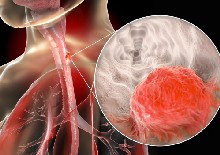 Shun-Long Ou, Jing Luo, Hua Wei, Xiao-Li, Qian Jiang
Value assessment of PD-1/PD-L1 inhibitors in the treatment of esophageal and gastrointestinal cancers
PD-1/PD-L1 inhibitors, ESMO-MCBS, ASCO-VF, value, cost
Only a few treatment regimens showed clinical value in EC and CRC using ASCO-VF and ESMO-MCBS frameworks. Nivolumab met valuable threshold in resectable locally advanced EC/GEJC. 14 positive therapeutic regimens assessed; 11 negative regimens showed no improvement in QoL and were below the …
Apr 21st • 13 mins read
 Jing Luo, Shunlong Ou, Hua Wei, Xiaoli Qin, Rui Peng, Song Wang and Qian Jiang
Value assessment of NMPA-approved new cancer drugs for solid cancer in China, 2016-2020
cancer drugs, clinical benefit, cost, ASCO-VF, ESMO-MCBS
This study is the first in China to comprehensively evaluate the value of new cancer drugs using ASCO-VF and ESMO-MCBS frameworks and investigate the correlation between drug prices and clinical benefits. Approximately half of the new cancer drugs approved by NMPA between 2016 and 2020 achie…
Feb 24th • 8 mins read

 Tom Caravela
7 High-Cost Interview Mistakes that are Easy to Avoid
digital marketing, content strategy, search engine optimization, keyword research, online visibility
Is your job search taking much longer than expected? Have you gone on interviews and feel it went well, but you still didn’t get the job? Interviewing in a competitive job market can be more challenging than one might think. COVID-19 has not made the interview process any easier – instea…
Jul 28th • 1 min read
 Consolación Molto MD, Thomas J. Hwang AB, Maria Borrell MD, Marta Andres MD, Ignasi Gich MD, PhD, Agustí Barnadas MD, PhD, Eitan Amir MD, PhD, Aaron S. Kesselheim MD, JD, MPH, Ariadna Tibau MD, PhD
Clinical benefit and cost of breakthrough cancer drugs approved by the US Food and Drug Administration
USFDA, ESMO-MCBS, NCCN, ASCO-CRC, clinical, drug aroval
The study evaluates the clinical benefit and pricing of breakthrough-designated versus non-breakthrough-designated cancer drugs. The analysis covers approvals from July 2012 to December 2017, using frameworks like ASCO-VF, ASCO-CRC, ESMO-MCBS, and NCCN Evidence Blocks. High clinical benef…
Jul 22nd • 12 mins read

 Envision Pharma Group
Patient involvement: A must-have in medicine development, but is it being overlooked in a cost-constrained environment?
patient engagement in pharma, patient-centric drug development, life sciences industry innovation, patient insights in medicine, regulatory compliance in patient engagement, patient involvement in clinical trials, benefits of patient advocacy, patient-cen
The life sciences industry is in a constant state of advancement, bringing more and more groundbreaking medicines, cutting-edge technologies, and innovative solutions to market. Amidst these rapid changes, patients remain at the heart of these scientific developments. In recent decades, the l…
May 9th • 5 mins read
 Shen Lin, Yaping Huang, Liangliang Dong, Meiyue Li, Yahong Wang, Dian Gu, Wei Wu, Dongni Nian, Shaohong Luo, Xiaoting Huang, Xiongwei Xu and Xiuhua Weng
The correlation between the costs and clinical benefits of PD-1/PD-L1 inhibitors in malignant tumors: An evaluation based on ASCO and ESMO frameworks
PD-1/PD-L1 inhibitors, malignant tumors, ASCO, ESMO, Immune Checkpoint Inhibitors, Gastrointestinal Cancers
Cancer drug innovation has significantly accelerated in the 21st century, with novel drug approvals and expenditures increasing notably. Assessment frameworks ASCO-VF and ESMO-MCBS were used to evaluate the clinical benefit of PD-1/PD-L1 inhibitors, finding that nearly half of the trials met "mea…
Feb 23rd • 9 mins read
 Patrick C. DeMartino, MD, Miloš D. Miljković, MD, MS, Vinay Prasad, MD
Potential Cost Implications for All US Food and Drug Administration Oncology Drug Approvals in 2018
FDA, drug approvals, oncology, cancer drugs
The new, expensive cancer drugs approved by the FDA in 2018 could drastically increase U.S. healthcare spending if widely adopted, but industry forecasts suggest low-level market uptake, maintaining current budget trends. The healthcare system's financial stability partially relies on many eligible …
Aug 31st • 7 mins read
 Angus Liu
Large pharma companies reduced headcounts by more than 22K in 2025 as $300B patent cliff looms
headcount, reduction, revenue per employee
Large pharmaceutical companies, each with at least $20 billion in 2025 revenue, collectively reduced their workforces by more than 22,000 employees last year. Among the 17 largest pharma companies analyzed in a Fierce Pharma review of annual reports, only five logged a head count increase in 2025…
Mar 23rd • 10 mins read

 Michael Pietrack
Leading From the Front: 3 Leadership Lessons From Mark Cuban
Businessman and entrepreneur Mark Cuban recently discussed leadership with Leadership Lab columnist Michael Pietrack. The three lessons that came out of that conversation start with one word: caring.
Dec 17th • 6 mins read
 Michael Pietrack
Leadership Lab: How To Spot When Employees Are About To Walk Away
Employees rarely leave companies for one reason alone. In this column, Kaye/Bassman’s Michael Pietrack shares a framework that helps leaders identify when their team members are thinking about heading for the exit—and how to address it.
Oct 22nd • 7 mins read
 Michael Pietrack
Managing Emotions After Being Downsized
The biggest challenge a person faces after being downsized is the wide range of emotions that follow. Over the past 15 years, I’ve observed many individuals deal with this unfortunate circumstance, and I wanted to share what I’ve seen others do to cope. I genuinely hope this helps you or someon…
Oct 21st • 5 mins read
 Michael Pietrack
The Great Resignation is Now The Great Hesitation
Over the last few years, the employment market has moved through dramatic swings. In 2021 and 2022, millions of professionals left their roles in what became known as The Great Resignation. Jobs were abundant, companies were aggressively hiring, and the perceived level of risk was low. If a new role…
Nov 19th • 5 mins read

 iNIZIO
Virtual Oncology MSL Team Increases KOL Engagement by 120%
Case Study (US) The Challenge Client needed comprehensive, scalable and innovative model. Goal: Cost-effectively supplement field based MSL team to provide national coverage. Objective: Share newly published guidelines with KOLs and gain key strategic insights. The Approach Highly …
Sep 3rd • 1 min read
Aaron S. Long, BS; Audrey D. Zhang, MD; Caitlin E. Meyer, MLIS; Alexander C. Egilman, BS; Joseph S. Ross, MD, MHS; Joshua D. Wallach, PhD, MS
Evaluation of Trials Comparing Single-Enantiomer Drugs to Their Racemic Precursors: A Systematic Review
single-enantiomer racemic drug pairs, single-enantiomer, FDA, RCTs, generic drugs
Chiral Switching: A strategy where drug manufacturers develop a single-enantiomer formulation from a racemic one to extend market exclusivity, often without proving enhanced efficacy or safety. Objective: To evaluate randomized clinical trials (RCTs) comparing FDA-approved single-enantiomer drugs…
May 6th • 18 mins read
 Shubham Sharma, J Connor Wells, Wilma M Hopman, Joseph C Del Paggio, Bishal Gyawali, Nazik Hammad, Annette E Hay, Christopher M Booth
Cancer, Clinical Trials, and Canada: Our Contribution to Worldwide Randomized Controlled Trials
cancer, clinical trials, research funding, Canada, high-income countries
This document reviews Canadian involvement in oncology randomized controlled trials (RCTs) from 2014-2017, comparing them to those from other high-income countries (HICs). Canada contributed to 155 (24%) of 636 HIC-led RCTs. Canadian RCTs focused more on palliative care (72%) compared to 62% in …
Apr 13th • 10 mins read