
Results for 'AI in Healthcare'
Browse oncology articles matching AI in Healthcare — expert analysis, clinical perspectives, and industry updates from across drug development and care delivery. Use the tabs above for podcasts, press releases, partners, and people for the same search.

 Jamie Riley
The Talent Inflection Point in Pharma and Biotech: A Challenge to Companies — and a Call to Candidates
hiring, talent demand, job market
As pipelines advance and execution accelerates, pharma and biotech hiring may shift again in 2026, reshaping talent demand.
Feb 4th • 7 mins read

 Tom Caravela
Resume Writing and Editing Tips for Pharma Professionals
Pharmaceutical recruiter, Resume writing tips, Professional CV, LinkedIn profile optimization, Job application keywords
As a Professional Pharmaceutical Recruiter, I read and evaluate resumes (as well as CVs), every day. While I am not a professional resume writer, I have a very strong understanding of what a good resume or CV looks like and what should be included. More importantly, I keep track of what is most effe…
Aug 8th • 1 min read
 Emmanuelle Jacqueta, Ghania Kerouani-Lafayeb, Francoise Grudeb, Sergio Goncalvesb, Annie Lorenced, Florence Turcryb, Liora Brunelb, Laetitia Belgodereb, Adrien Monardc, Gaëlle Guyaderb, Lotfi Boudalib, Nicolas Albin
Comparative study on anticancer drug access times between FDA, EMA and the French temporary authorisation for use program over 13 years
Innovation, Expanded access, Early drug access, Cancer, FDA, EMA
Cancer incidence is increasing globally, and while medical innovation significantly impacts patient survival, the drug development process is lengthy, often exceeding 10 years for marketing authorization (MA). France has implemented the ATU (Temporary Authorization for Use) program to facil…
Apr 7th • 12 mins read
 Karen Geary
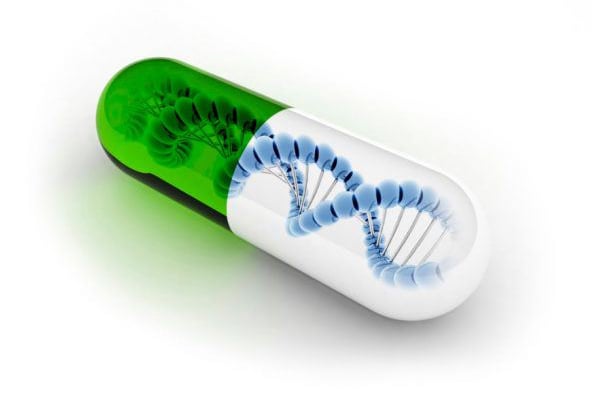
Finding the Right Drug at the Right Dose the First Time: Has the Era of Personalized Formularies Finally Arrived?
drug dose, dose, pharmacogenomics, Personalized medicine
Many Americans take medications that are ineffective or cause adverse reactions due to genetic differences in drug metabolism. Pharmacogenomics, the study of how genes affect drug response, can help tailor medications to individual genetic profiles, reducing trial and error in prescriptions. A s…
Sep 27th • 1 min read
 Idine Mousavi, BA; Timothée Olivier, MD; Vinay Prasad, MD, MPH
Cost per Event Averted in Cancer Trials in the Adjuvant Setting From 2018 to 2022
anticancer drugs, adjuvant therapy, FDA approvals, cost per event averted, surrogate endpoints, oncology drug costs
Importance: Evaluating the cost-effectiveness of adjuvant therapies based on the cost per event averted. Objective: To assess the costs per event averted for anticancer drugs approved by the FDA between January 2018 and March 2022. Design, Setting, and Participants: Cross-sectional study of F…
Jun 10th • 30 mins read
 Natansh D. Modi, BPharm; Ahmad Y. Abuhelwa, PhD; Ross A. McKinnon, PhD
Audit of Data Sharing by Pharmaceutical Companies for Anticancer Medicines Approved by the US Food and Drug Administration
IPD sharing, clinical trial transparency, FDA anticancer approvals, oncology trials, data accessibility, pharmaceutical industry
The study examines the eligibility for individual participant data (IPD) sharing from clinical trials that supported the FDA approval of anticancer medicines over the past 10 years. Of the 304 trials analyzed, 136 (45%) were eligible for IPD sharing, while 168 (55%) were not. IPD sharing rates v…
Jul 28th • 20 mins read
 Robbe Saesen, Georgios Kantidakis, Ann Marinus, Denis Lacombe, Isabelle Huys
How do cancer clinicians perceive real-world data and the evidence derived therefrom? Findings from an international survey of the European Organisation for Research and Treatment of Cancer
real-world evidence, real-world data, oncology, cancer, survey, clinicians, randomized controlled trials, Europe
Real-world evidence (RWE) is increasingly being used in the development and decision-making processes for anticancer therapies, but clinician views on its use are unclear. A survey conducted between May and July 2021 involved 557 clinicians from 30 countries and 13 cancer domains. Most clinician…
Aug 1st • 45 mins read
 Rinda Devi Bachu, Mariam Abou-Dahech, Swapnaa Balaji, Sai H. S. Boddu, Samson Amos, Vishal Singh, R. Jayachandra Babu, Amit K. Tiwari
Oncology biosimilars: New developments and future directions
biologics in cancer treatment, biosimilars development, high cost of biologics, healthcare system burden, biosimilars safety, regulatory guidelines for biosimilars, immunogenicity concerns, pharmacoeconomics of biosimilars
Biologics are essential in cancer treatment as both therapeutic and supportive care agents, but they are expensive and require extensive testing to ensure safety. The high cost of developing and manufacturing biologics can be a burden on healthcare systems, limiting patient access to necessary tr…
Nov 25th • 30 mins read

 Envision Pharma Group
Patient involvement: A must-have in medicine development, but is it being overlooked in a cost-constrained environment?
patient engagement in pharma, patient-centric drug development, life sciences industry innovation, patient insights in medicine, regulatory compliance in patient engagement, patient involvement in clinical trials, benefits of patient advocacy, patient-cen
The life sciences industry is in a constant state of advancement, bringing more and more groundbreaking medicines, cutting-edge technologies, and innovative solutions to market. Amidst these rapid changes, patients remain at the heart of these scientific developments. In recent decades, the l…
May 9th • 5 mins read
 Envision Pharma Group
Empowering people to drive medical affairs performance with AI
AI in medical affairs, 4Sight approach to AI, empowering medical teams with AI, AI-driven medical affairs performance, enhancing medical affairs through AI, AI integration in healthcare, training for AI adoption, change management in healthcare AI, AI too
Artificial intelligence (AI) is transforming the pharmaceutical industry and continues to be a key topic of discussion in the field. As medical affairs grow more complex, AI can significantly reduce the time required to analyze and extract valuable insights, thereby accelerating the generation of ac…
Aug 14th • 5 mins read
 Gracy Crane, John C. W. Lim, Churn-Shiouh Gau, Jipan Xie & Laura Chu
The challenges and opportunities in using real-world data to drive advances in healthcare in East Asia: expert panel recommendations
Real-world data, real-world evidenc, East Asia, policy recommendations, decision-making support, East Asia, expert, RWD, RWE
Recommend approaches to improve the use of Real-World Evidence (RWE) in healthcare decision-making in East Asia and beyond. Encourage large-scale collaborations involving diverse stakeholders. Key stakeholders include government agencies, hospitals, research organizations, patient groups, and th…
Jun 28th • 13 mins read
 Francesco Cerisoli, PhD, Farzad Ali, MSc, Tamás Bereczky, MA, PhD, Natacha Bolaños, BS, Lars Bullinger, MD, Sujith Dhanasiri, MPhil, MSc, James Gallagher, PhD, Sonia García Pérez, MSc, Jan Geissler, MiBA, Yann Guillevic, DEA, Kathryn Harrison, PhD, Anasta
Building a Healthcare Alliance for Resourceful Medicine Offensive Against Neoplasms in Hematology Added Value Framework for Hematologic Malignancies: A Comparative Analysis of Existing Tools
clinical value framework, hematology, Healthcare Alliance for Resourceful Medicine, Offensive Against Neoplasms in hematology, patient-reported outcomes, HARMONY, analysis
Current Value Frameworks (VFs) have limitations and do not meet HARMONY's ambitions for assessing the therapeutic/clinical value of innovative health technologies. There is a need for a cross-stakeholder agreement on the definition of "value," which varies among patients, clinicians, and payers. …
May 17th • 12 mins read
 Fernando Petracci, Chirag Ghai, Andrew Pangilinan, Luis Alberto Suarez, Roberto Uehara, Marwan Ghosn
Use of real-world evidence for oncology clinical decision making in emerging economies
Asia-Pacific, effectiveness, electronic database, health policy, Latin America, Middle East, randomized clinical trials, real-world data, real-world evidence, safety
Despite RWE being a relatively nascent concept in emerging economies, we have seen evidence of increasing use over the past 5 years growing at 11% per year. That said, barriers specific to emerging economies need to be overcome through collaborative efforts, with regulatory agencies at the forefront…
May 5th • 12 mins read
 Paul G. Kluetz, Patricia Keegan, George D. Demetri, Katherine Thornton, Joohee Sul, Janice Kim, Harvey Katzen, Laurie Beth Burke, R. Donald Harvey, Elleni Alebachew, Sundeep Agrawal, Abhilasha Nair, Martha Donoghue
FDA Oncology Center of Excellence Project Renewal: Engaging the Oncology Community to Update Product Labeling for Older Oncology Drugs
FDA labeling format, PLR format, oncology drugs, FDA
The FDA conducts independent reviews of scientific data to ensure the safety and efficacy of investigational drug products. FDA-approved product labeling is a highly trusted source of information for approved drug use. FDA approval is only the beginning of a drug's lifecycle, with ongoing c…
Feb 15th • 13 mins read
 Bruce A. Feinberg, DO Ajeet Gajra, MBBS, MD Marjorie E. Zettler, PhD, MPH Todd D. Phillips, PharmD Eli G. Phillips Jr., PharmD, JD Jonathan K. Kish, PhD, MPH
Use of Real-World Evidence to Support FDA Approval of Oncology Drugs
Food and Drug Administration, oncology drug approval, real-world data, real-world evidence
Real-world evidence (RWE) has gained increased attention in recent years as a complement to traditional clinical trials. The use of RWE to establish the efficacy of oncology drugs for Food and Drug Administration (FDA) approval has not been described. In this paper, we review 5 recent examples whe…
Sep 14th • 16 mins read
 Carina Dolan, PharmD, BCOP
Opportunities and challenges in biosimilar uptake in oncology
Trastuzumab, Rituximab, biosimiliar agents, emerging agents, cetuximab, bevacizumab, clinical trials, biosimiliars
The U.S. has 10 approved biosimilars, including 3 for oncology, with many more in development, potentially increasing access to expensive biologics. Acceptance by healthcare providers and patients requires extensive education, resolving concerns about immunogenicity, and ensuring interchangeability.…
Jun 26th • 7 mins read
 Envision Pharma Group
AI-powered real-world evidence: Strategically enhancing value and access
Oncology, Clinical Development, Targeted Therapy, Immunotherapy, Genomic Profiling, CAR-T Cell Therapy, Precision Medicine
Real-world evidence (RWE) complements traditional randomized controlled trials by providing insights from diverse data sources, helping healthcare decision-makers with coverage, reimbursement, and treatment guidelines. Artificial intelligence (AI) and natural language processing (NLP) are pivotal…
Aug 22nd • 5 mins read
 Thomas Schmitt
Reagent Solutions to Support Outbreak Response Against Bundibugyo Virus
Ebola haemorrhagic fever is a syndrome that can lead to death within a few days of the onset of symptoms. It directly affects the immune system and the vascular bed, resulting in an extremely high mortality rate. The Ebola virus (EBOV) belongs to the Filoviridae family within the order Mononegaviral…
Sep 4th • 0 min read
Thomas Schmitt
Reagent Solutions to Support Outbreak Response Against Bundibugyo Virus
Ebola haemorrhagic fever is a syndrome that can lead to death within a few days of the onset of symptoms. It directly affects the immune system and the vascular bed, resulting in an extremely high mortality rate. The Ebola virus (EBOV) belongs to the Filoviridae family within the order Mononegaviral…
Sep 4th • 0 min read

 iNIZIO
Transforming oncology: Five frontiers driving progress in cancer care
From biomarker-driven breakthroughs to AI-powered early detection and a renewed commitment to equity and patient centricity, the past 12 months have seen major strides across cancer research, treatment, and communication. At Inizio, we’ve had a front-row seat to this transformation, supporting…
May 16th • 5 mins read