
Results for 'Early phase clinical trial'

 Emmanuelle Jacqueta, Ghania Kerouani-Lafayeb, Francoise Grudeb, Sergio Goncalvesb, Annie Lorenced, Florence Turcryb, Liora Brunelb, Laetitia Belgodereb, Adrien Monardc, Gaëlle Guyaderb, Lotfi Boudalib, Nicolas Albin
Comparative study on anticancer drug access times between FDA, EMA and the French temporary authorisation for use program over 13 years
Innovation, Expanded access, Early drug access, Cancer, FDA, EMA
Cancer incidence is increasing globally, and while medical innovation significantly impacts patient survival, the drug development process is lengthy, often exceeding 10 years for marketing authorization (MA). France has implemented the ATU (Temporary Authorization for Use) program to facil…
Apr 7th • 12 mins read
 E.M. Ray, L.A. Carey, K.E. Reeder-Hayes
Leveraging existing data to contextualize phase II clinical trial findings in oncology
HER2, phase II trials, oncology, iDFS, EBC, early stage breast cancer
In the USA, over 250,000 women are diagnosed with early-stage breast cancer (EBC) yearly, with up to 30% having HER2 amplification. The standard care for HER2-positive EBC involves chemotherapy plus HER2-directed therapy for one year. The phase II Adjuvant Paclitaxel and Trastuzumab (APT) tr…
Sep 21st • 3 mins read
 Consolación Molto MD, Thomas J. Hwang AB, Maria Borrell MD, Marta Andres MD, Ignasi Gich MD, PhD, Agustí Barnadas MD, PhD, Eitan Amir MD, PhD, Aaron S. Kesselheim MD, JD, MPH, Ariadna Tibau MD, PhD
Clinical benefit and cost of breakthrough cancer drugs approved by the US Food and Drug Administration
USFDA, ESMO-MCBS, NCCN, ASCO-CRC, clinical, drug aroval
The study evaluates the clinical benefit and pricing of breakthrough-designated versus non-breakthrough-designated cancer drugs. The analysis covers approvals from July 2012 to December 2017, using frameworks like ASCO-VF, ASCO-CRC, ESMO-MCBS, and NCCN Evidence Blocks. High clinical benef…
Jul 22nd • 12 mins read
 S.E. Abdullah, E. Oflazoglu, J.C. Soria, M.M. Dar
New Realities of Phase I Clinical Trials in the Era of
durvalumab, durvalumab experience, clinical trials, immunotherapy
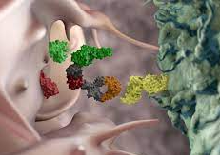
The development of cancer immunotherapy, particularly durvalumab, has progressed rapidly due to innovative strategies, such as novel study designs. Durvalumab, an anti-PD-L1 monoclonal antibody, was developed by AstraZeneca starting in 2012, with initial trials leading to its accelerated appr…
Oct 7th • 5 mins read
 Guillaume Beinse, MD, Virgile Tellier, Valentin Charvet, MSc, Eric Deutsch, MD, PhD, Isabelle Borget, PharmD, PhD, Christophe Massard, MD, PhD., Antoine Hollebecque, MD, PhD, and Loic Verlingue, MD
Prediction of Drug Approval After Phase I Clinical Trials in Oncology: RESOLVED2
clinical trials, RESOLVED2, FDA
Challenge in Oncology Drug Development: The field is currently facing an increase in the number of antineoplastic agents (ANAs) entering phase I clinical trials (P1CTs) and a high attrition rate for final FDA approval. Objective: Development of a machine learning algorithm, RESOLVED2, to …
Sep 20th • 12 mins read

 Envision Pharma Group
Patient involvement: A must-have in medicine development, but is it being overlooked in a cost-constrained environment?
patient engagement in pharma, patient-centric drug development, life sciences industry innovation, patient insights in medicine, regulatory compliance in patient engagement, patient involvement in clinical trials, benefits of patient advocacy, patient-cen
The life sciences industry is in a constant state of advancement, bringing more and more groundbreaking medicines, cutting-edge technologies, and innovative solutions to market. Amidst these rapid changes, patients remain at the heart of these scientific developments. In recent decades, the l…
May 9th • 5 mins read
 Yafang Huanga, Weiyi Xiongb, Jingwei Zhaoa, Wentao Lia, Li Mac, Hao Wua
Early phase clinical trial played a critical role in the Food and Drug Administration-approved indications for targeted anticancer drugs: a cross-sectional study from 2012 to 2021
Early phase clinical trial, Dose-expansion cohort, Single-arm trial, Pivotal trial, FDA approved indications, Targeted anticancer drugs
Analysis of 188 FDA-approved indications for 95 molecular targeted anticancer drugs between 2012 and 2021. 59.6% of indications were approved based on Early Phase Clinical Trials (EPCTs). There was a notable annual increase of 22.2% in approvals based on EPCTs, compared to a 5.0% increase for ph…
Mar 9th • 10 mins read
 Garth W. Strohbehn, MD, MPhil, Allen S. Lichter, MD and Mark J. Ratain, MD
US Government Payer-Funded Trials to Address Oncology's Drug-Dosing Conundrum: A Congressional Call to Action?
ORF, NCTN, dosing, clinical trials, FDA
Since the mid-20th century, cancer drug development has been driven by the "more is better" assumption, seeking the maximum tolerated dose in early trials. The FDA's Oncology Center of Excellence (OCE) Project Optimus (2021) requires dose optimization for new oncology drugs, but this does not…
Feb 13th • 5 mins read

 Michael Pietrack
Leadership Lab: 4 Ways Biopharma Leaders Can Prepare for Media Interviews
Media coverage can help biopharma executives connect with, inform and inspire the public. In this column, Kaye/Bassman’s Michael Pietrack and three communications experts share how to make the most of these opportunities.
Aug 20th • 6 mins read
 Nidal Al-Huniti, Yan Feng, Jingyu (Jerry) Yu, Zheng Lu, Mario Nagase, Diansong Zhou, Jennifer Sheng
Tumor Growth Dynamic Modeling in Oncology Drug Development and Regulatory Approval: Past, Present, and Future Opportunities
tumor growth, drug developement, drug approval, TGD, MIDD, PDUFA
Model-informed drug development (MIDD) has advanced rapidly in recent years, especially in oncology. The Prescription Drug User Fee Act (PDUFA) VI includes commitments to enhance MIDD. Tumor growth dynamic (TGD) modeling is a key MIDD approach used to accelerate drug development, support new dru…
Jun 26th • 18 mins read
 Gregory S. Calip, PharmD, MPH, PhD, Ivy P. Altomare, MD, Jenny S. Guadamuz, MSPH, PhD
Evaluating External Validity of Oncology Biosimilar Safety Studies
biologics, external validity, FDA, biosimilars, trastuzumab
Biologics are the fastest growing medication class in the US, significantly contributing to healthcare costs. The Biologics Price Competition and Innovation Act of 2009 created an abbreviated approval pathway to make biological products more accessible. A phase 3 randomized trial of SB3, a trast…
Apr 6th • 2 mins read
 Emerson Y. Chen, MD, Vikram Raghunathan, MD, Vinay Prasad, MD, MPH
An Overview of Cancer Drugs Approved by the US Food and Drug Administration Based on the Surrogate End Point of Response Rate
FDA, RR, drug approvels, OS
Many cancer drugs come to market based on single-arm studies with modest RRs. Most of these drugs are tested in studies of over 100 patients prior to approval. Most (60%) of these approvals lack randomized clinical trials during the life cycle of the product. Our findings suggest greater room for th…
May 28th • 5 mins read
 Kirsten B Goldberg, Gideon M Blumenthal, Amy E McKee and Richard Pazdur
The FDA Oncology Center of Excellence and Precision Medicine
Biomarkers, drugs, hematology, medicine, oncology, precision medicine, regulation
The FDA is exploring real-world evidence to enhance understanding of the long-term safety and efficacy of oncology drugs. Initiatives like the Information Exchange and Data Transformation initiative are building infrastructure for big-data analytics. Additionally, patient-focused programs aim to inc…
Nov 6th • 3 mins read