Podcast
 The Oncology Nursing Podcast

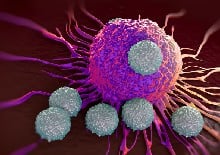
If FDA-approved checkpoint inhibitor drugs are universally available, we estimated that the proportion of US patients with cancer who could be eligible for such drugs is approximately 44%, while approximately 13% have a response to these drugs. These estimates, although modest, are better than estimates for oncology drugs in other classes, such as genome-targeted therapies. These results may help policy makers, journalists, and physicians have more realistic discussions about checkpoint inhibitor drugs. Moreover, we hope these results will motivate researchers to develop drugs that benefit an even larger percentage of individuals with cancer than these current estimates.
Cancer checkpoint inhibitors have received considerable and broad interest because of their ability to generate durable responses in many hitherto intractable malignant tumors and for improvements in overall survival in several randomized trials. These promising drugs, and their underlying preclinical science, formed the basis of the 2018 Nobel Prize in Medicine.
Checkpoint inhibitors currently approved by the US Food and Drug Administration (FDA) target the cytotoxic T-lymphocyte–associated protein 4 (CTLA-4), programmed cell death receptor 1 (PD-1), or programmed cell death ligand 1 (PD-L1) and work by preventing immune evasion from cancer cells. The first approved agent, ipilimumab, received FDA marketing authorization in 2011 for metastatic melanoma. Since then, 5 more checkpoint inhibitor drugs have been approved for a total of 14 different indications...
The Oncology Nursing Podcast
 MSL Talk: Tom Caravela, Ariel Katz
 MSL Talk: Tom Caravela, Brad Atkinson, Brian Wilson, Christina Wright
 MSL Talk: Tom Caravela, Jessica McLin, Melody Davis
 Di Maria Jiang, Kelvin K. W. Chan, Raymond W. Jang, Christopher Booth, Geoffrey Liu, Eitan Amir, Robert Mason, Louis Everest, Elena Elimova
 Shun-Long Ou, Jing Luo, Hua Wei, Xiao-Li, Qian Jiang