Podcast
 MSL Talk: Tom Caravela, Sarah Snyder

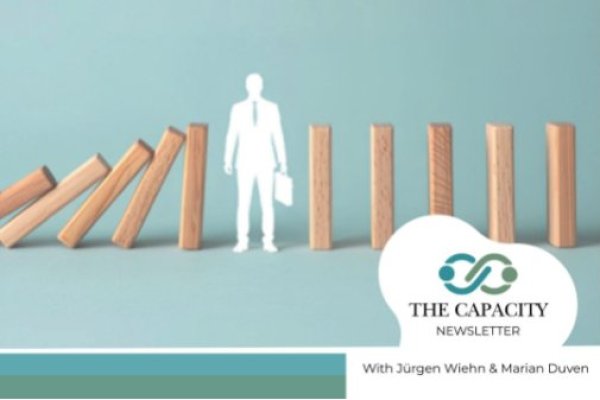
In many high-performing environments, pressure is not the exception.
It becomes the operating baseline.
Deadlines compress.
Decisions stack.
Communication tightens.
Expectations increase.
And over time, something subtle but important happens.
Leadership teams begin to rely on pressure to function.
Clarity appears when urgency is high.
Decisions feel easier when stakes are immediate.
Action accelerates when tension rises.
On the surface, this looks like performance.
But structurally, it creates dependency.
Calm starts to feel unproductive.
Space feels like loss of momentum.
Stability feels unfamiliar.
So pressure is unintentionally maintained:
This is often interpreted as ambition or drive.
But physiologically, it reflects a system operating in sustained activation.
And that comes at a cost.
When leadership systems rely on pressure to function:
Not because leaders lack capability but because the system they are operating from is overloaded.
This is rarely recognised as such.
Instead, it is addressed as a skills issue.
More frameworks.
More tools.
More expectations.
But the underlying constraint remains unchanged.
Sustainable performance is not defined by how much pressure a system can tolerate.
It is defined by how much clarity it can access without pressure.
When capacity is restored, something shifts.
Conversations become more constructive.
Decisions become more grounded.
Alignment becomes faster.
Not because strategy improved but because the system supporting it did.
This is where leadership capacity becomes operational, not conceptual.
In high-stakes environments, the ability to access clarity without pressure becomes a strategic advantage and not a personal luxury.
MSL Talk: Tom Caravela, Sarah Snyder

 OVN Staff
 MSL Talk: Tom Caravela
 MSL Talk: Tom Caravela, Hahn-Ey Lee
 MSL Talk: Tom Caravela, Sarah Snyder
 MSL Talk: Tom Caravela, Allison Trucillo